



ServiceNow AI in 2026: What’s Actually Ready to Deploy
ServiceNow
5 MIN READ
August 6, 2026

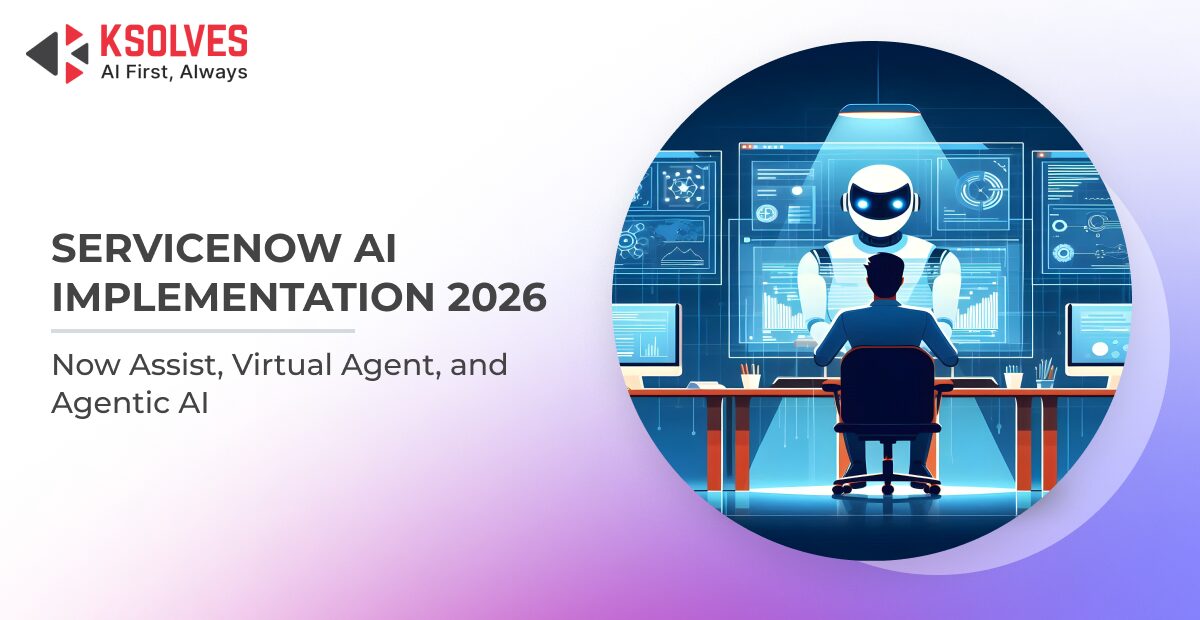
A year ago, ServiceNow AI meant summarizing a ticket. Now the pitch is a service desk that runs itself. That shift is real, but there’s a gap between what gets demoed at Knowledge and what you can safely turn on next week.
At a glance:
- Now Assist — assistive AI, production-ready today, start here
- Virtual Agent — conversational AI, mid-transition, deflection-ready but knowledge-dependent
- AI Agents — autonomous AI, real but early, governance-gated
One naming note: ServiceNow has consolidated its AI under a single experience brand called Otto, unveiled at Knowledge 2026, unifying Now Assist and the platform’s conversational and search experiences into one entry point. This guide still uses Now Assist, Virtual Agent, and AI Agents throughout, since that’s how most teams search and license, with Otto as the umbrella and AI Control Tower as the governance layer across all of it.
Where This Sits in ServiceNow’s Bigger Story
ServiceNow built its name on ITSM, then used the same low-code Now Platform underneath to expand into HR, customer service, and security operations. Predictive Intelligence added the first real machine learning. Now Assist added generative AI. In 2025, AI Experience turned the platform itself into something people work through by voice or agent rather than clicking screens. That trajectory is why agentic AI in 2026 is credible rather than a leap.
Everything now sits under a single ServiceNow AI Platform, the company’s umbrella term for four functions: sense, decide, act, secure. Under it: Otto (the assistant), AI Agents (the autonomous workers), AI Control Tower (visibility across every agent and model), and Context Engine (shared business context so agents can act, not just converse). The scale behind it: 450+ connected systems, 85%+ of the Fortune 500, 100,000+ enterprise AI apps in production, and a 97%+ renewal rate across 20 quarters. NVIDIA’s Jensen Huang has called ServiceNow “the operating system of enterprise AI agents.”
Two things worth tracking as you plan past this year. First, Autonomous Workforce, ServiceNow’s term for AI specialists that run a full job function rather than a single task, is where the AI Agents layer below is headed. Second, model choice is widening: as of January 2026, OpenAI’s GPT-5.2 became a preferred intelligence option under a multi-year deal, adding native voice on top of existing multi-model support across Azure OpenAI, Anthropic Claude, and Google Gemini. Neither changes what’s production ready today, but both raise the ceiling on what to plan for.
Planning Your ServiceNow AI Roadmap Past 2026? Talk to Ksolves About Where Your Instance Actually Stands!
The Real Shift in 2026: From Assisting to Acting
In 2025, generative AI summarized cases and suggested next steps, but a person still had to act. In 2026, agentic AI reasons through a request, plans the steps, and executes without anyone in the loop. An assistant tells you a password needs resetting; an agent resets it and closes the ticket.
That’s why the readiest capabilities aren’t always the flashiest ones.
Layer 1: Now Assist — Ready for Production Today
Now Assist is ServiceNow’s generative AI layer, built directly into the platform rather than bolted on as a separate tool. It sits behind the scenes across ITSM, HR, and customer service workflows, reading the records and knowledge already in your instance to draft, summarize, and suggest, without needing a separate AI product or a new interface for agents to learn.
It’s the lowest-risk, most mature tier, and where almost every organization should start:
- Incident and Case Summarization: the obvious first win on complex records with long activity logs and multiple reassignments
- Resolution Notes Generation: turns a resolved case into a summary that resurfaces for similar future issues via Predictive Intelligence
- AI Search: retrieval-augmented generation grounded in what a user is permitted to see, tuned with Result Improvement Rules
- Knowledge generation and Knowledge Center: close documentation gaps and retire duplicates
- Creator and code skills: accelerate development work for builders
Sequence it: summarization and AI Search first, resolution notes next, then move up to Virtual Agent. One wrinkle: most agent-facing skills need the modern Service Operations Workspace, not legacy backend forms, so plan that migration if your fulfillers are still in classic forms. Employee-facing skills like AI Search and Virtual Agent don’t carry that dependency and can roll out in parallel.
Layer 2: Virtual Agent — Conversational, Mid-Transition
Virtual Agent is ServiceNow’s conversational interface, the chatbot layer employees and customers interact with directly to resolve requests, check status, or get an answer without opening a ticket. Where Now Assist works quietly behind an agent’s screen, Virtual Agent is the front door users actually talk to, and it’s mid-transition. The older generation ran on rigid, pre-built topic trees; the current one runs on LLMs through Now Assist and handles far more variation without a scripted path for everything.
Migrate deliberately if you have an existing topic-based assistant, since the language model often absorbs conversations that used to need a dedicated topic. A migration utility helps, each portal carries a single assistant, and conversational catalog support lets users request items mid-conversation. Voice is expanding too, with multilingual support reaching phone channels.
It’s ready for self-service deflection now, with one dependency: its quality tracks your knowledge base far more closely than summarization does, since summarization works off the record in front of it while Virtual Agent depends entirely on what it can retrieve. Fix thin or stale knowledge first.
Layer 3: AI Agents — Real, Governed, Early on the Curve
AI Agents are ServiceNow’s autonomous programs, distinct from Now Assist and Virtual Agent in one key way: they don’t wait for a person to read a suggestion or type a question. An agent interprets a request, decides what needs to happen, and carries out the steps itself, updating records and triggering actions across systems without a human clicking through each one.
This is genuinely arriving, not a keynote promise. What it can do:
- Reason and plan across systems, reaching Azure, AWS, or SAP through IntegrationHub
- Collaborate with other agents on tasks spanning multiple domains
- Build in AI Agent Studio, a low- and no-code environment, with AI Agent Advisor surfacing use cases that map to available agents
- Reach external tools via MCP, now generally available
- Draw on a growing pre-built workflow library across ITSM, ITOM, HR, security operations, and change
Its prerequisites are non-negotiable. A clean CMDB, alignment to the Common Service Data Model, and the right licensing tier are the entry price. Start with high-volume, low-complexity work, password resets, provisioning, routine access, before pointing agents at your hardest security incident.
The Foundation Most AI Projects Skip
Four foundations carry everything above them.
Knowledge quality comes first, since AI Search and Virtual Agent depend on it entirely. Retire outdated content, build feedback loops, audit for gaps, and use access criteria so each persona gets the right answer.
Data quality is next. A clean CMDB aligned to the Common Service Data Model makes impact analysis and agentic action reliable, and record hygiene feeds the AI that learns from it.
Governance is the piece most organizations underestimate. AI Control Tower gives centralized visibility, guardrails, and value measurement, and manages approved model providers. Now Assist Guardian adds a safety layer, and existing role-based access controls still apply underneath. Decide early who owns it; your platform administrator may not be the right owner.
Platform readiness rounds it out. Advanced skills need higher product tiers and modern workspaces, so confirm tier, workspace strategy, and upgrade currency first. Check data residency too, since some features and model providers carry restrictions in regulated environments.
Not Sure Where Your Foundation Stands? Get a Straight Assessment of Your Knowledge, Data, and Governance Readiness!
A Rollout That Actually Works
Discover. Name two or three high-value use cases with real owners, run a readiness assessment, and set KPIs with a baseline before switching anything on.
Prove. Activate summarization and AI Search, run a short pilot, and measure against that baseline with a small group.
Scale. Expand into adjacent use cases, layer in Virtual Agent then agentic workflows as the foundation firms up, and extend governance as you grow. Tie it to metrics leadership tracks: resolution time, first contact resolution, deflection, agent productivity.
What This Looks Like in Practice
The shelf-ware rescue. A client had bought Now Assist and let it sit unused. Starting with summarization and AI Search, and capturing baselines, delivered visible wins within weeks and built momentum to expand.
The repetitive ticket problem. A client’s senior engineers were buried under password resets and access provisioning. Governed agentic workflows with guardrails took over those cases, freeing the engineers for architecture work.
The empty CMDB. A client wanted autonomous agents but had a CMDB full of gaps. Building a trusted CMDB aligned to the Common Service Data Model came first; agents went on top only once the data held up.
Our Two Cents
Most of the noise around ServiceNow AI in 2026 is about what agents can do. The part that actually decides outcomes is almost never discussed at the same volume: whether an organization’s knowledge, data, and governance can support that capability once it’s switched on.
It comes down to whether the unglamorous readiness work happened before anyone touched the AI settings.
The other thing worth saying directly: Autonomous Workforce and the OpenAI partnership are early enough that betting a 2026 roadmap on either would be premature. They’re worth planning around, not building around yet. The organizations that will be ahead in 2027 are the ones treating this year as the readiness year, not the rollout year.
Get Your ServiceNow AI Roadmap Right
Trying to get Now Assist off the shelf, planning a rollout past the pilot stage, or working out how to adopt agentic AI without pointing it at broken data first: those are solvable problems, not blockers.
We start with an honest read of where your instance actually stands, not a features pitch. From there, Ksolves builds the knowledge and CMDB foundation your rollout depends on, sets up AI Control Tower governance before agents go live rather than after, and sequences the move from Now Assist quick wins to governed agentic workflows around the use cases that matter to your business. As an NSE- and BSE-listed company with CMMI Level 3 appraisal and ISO-certified delivery, the rigor behind that sequencing is the same rigor we bring to every engagement.
Ready to Move Past the Pilot Stage? Partner with Ksolves for a Foundation-First ServiceNow AI Rollout!
 Shivam Yadav
Picture the way most HR teams still run. An employee has a question about a deduction on their payslip, so […]






























AUTHOR
ServiceNow
Shivam Yadav, a Senior Software Engineer at Ksolves, with 4+ years of experience, specializing in Health Cloud and Salesforce development. A 4× Salesforce Certified expert (PD1, PD2, SFCC B2C DEV, Associate), he excels in React Native, Java, Python, and C++.
Share with