



CI/CD Pipelines: The Backbone of Modern DevOps
DevOps
5 MIN READ
May 25, 2026

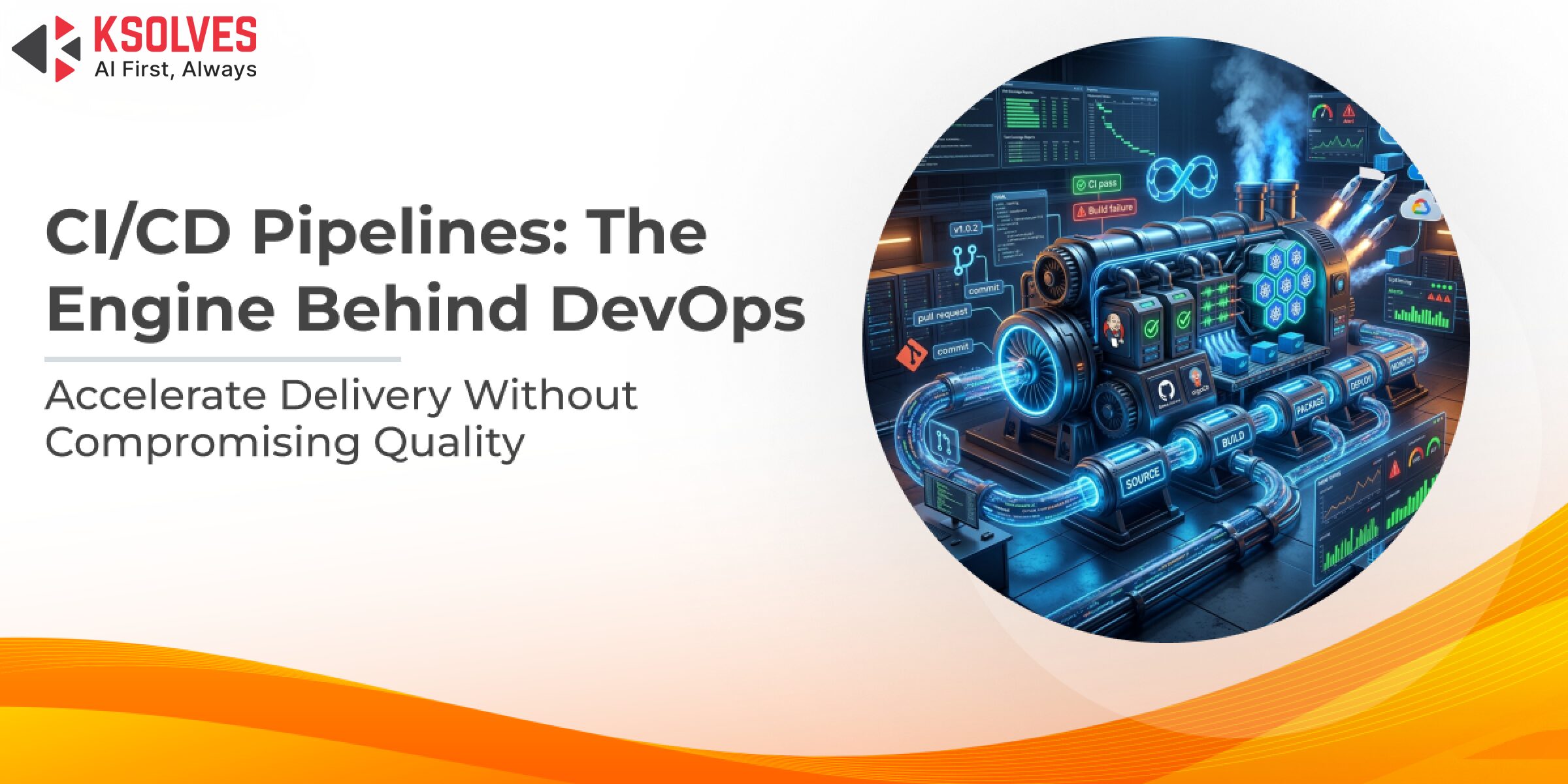
Modern software development is all about speed, collaboration, and reliability, and that’s where CI/CD comes in. Short for Continuous Integration and Continuous Deployment (or Delivery), CI/CD is the engine that powers efficient DevOps workflows.
It allows teams to automatically build, test, and release code in smaller, frequent batches, reducing manual errors and enabling faster feedback loops. With CI/CD in place, development becomes more agile, releases become more reliable, and innovation happens faster.
If your team is still shipping code manually, you’re already behind.
What is CI/CD Pipeline?
A CI/CD pipeline is an automated process that takes your code from development to production with minimal manual effort. It ensures that code changes are continuously integrated, tested, and delivered in a reliable, repeatable way.
Key Stages of a CI/CD Pipeline:
- Code Commit: Developers push code to a shared repository (like GitHub or GitLab). This triggers the pipeline.
- Build: The pipeline compiles the code and packages it into deployable artifacts. If the build fails, the process stops here.
- Test: Automated tests (unit, integration, functional) validate code quality and catch issues early.
- Release: After successful testing, the code is marked as ready for release, either for staging or production.
- Deploy: Code is automatically or manually deployed to production environments where users can access it.
If you want a broader foundation before diving into pipeline setup, our DevOps: The Ultimate Guide covers the full spectrum of practices, tools, and team structures involved.
CI vs CD (Delivery) vs CD (Deployment)
These three terms often get used together, but they serve different purposes in the DevOps lifecycle. Understanding the difference helps teams choose the right level of automation for their workflows.
- Continuous Integration (CI): CI is the practice of automatically integrating code changes from multiple developers into a shared repository several times a day. Each change triggers automated builds and tests, helping teams catch bugs early and keep the codebase stable.
- Continuous Delivery (CD): This builds on CI by ensuring that the software is always ready for release. While the deployment to production isn’t automatic, it can be done at any time with just a click or approval. It adds a layer of confidence and control before going live.
- Continuous Deployment (CD): This takes things a step further by fully automating the release process. Every code change that passes testing is deployed straight to production—no approvals, no delays. It enables rapid iteration and faster user feedback.
Why CI/CD Pipelines Matter in DevOps
CI/CD pipelines are at the heart of modern DevOps. They bring speed, consistency, and teamwork to the software development process, helping teams ship better products with less stress.
- Faster Releases with Confidence
CI/CD allows teams to release updates quickly, while still making sure everything works as expected. Each code change is automatically tested and validated, which reduces the chances of bugs slipping through. Frequent, smaller releases are easier to manage and less risky. - Less Manual Work, More Focus on What Matters
Automating repetitive tasks like testing and deployment saves valuable time. Instead of spending hours on routine steps, developers can focus on solving real problems and building new features that add value. - More Reliable Production Environments
By testing every change early, CI/CD pipelines catch issues before they reach users. This leads to fewer surprises in production and a more stable experience for customers. It also reduces the chances of late-stage bugs causing delays or outages. - Better Collaboration Between Teams
CI/CD encourages shared responsibility and visibility across development and operations. Everyone understands the release process and can track progress easily. This improves communication, builds trust, and helps teams work together more efficiently.
Key Components of a CI/CD Pipeline
A strong CI/CD pipeline isn’t just about automation. It’s about bringing the right tools and practices together to deliver quality software quickly and reliably. Let’s walk through the essential building blocks:
- Version Control
This is where everything begins. Version control systems like Git track every code change, help teams collaborate without stepping on each other’s toes, and offer a safety net when you need to roll back. It’s the foundation of any modern DevOps workflow. - Build Automation
Once code is committed, build tools step in to compile it, resolve dependencies, and package it for deployment. Automating this process ensures consistency and frees up developers from repetitive manual work. - Automated Testing
Before any code moves forward, it needs to be tested. Automated testing happens at multiple levels:
- Unit tests check individual components,
- Integration tests ensure different parts of the system work together,
- End-to-end tests simulate real user behavior.
This layered approach helps catch bugs early, reducing the risk of issues in production.
- Artifact Management
After successful builds and tests, the resulting files, known as artifacts, are stored for reuse. Docker images or binary files are saved in repositories like Artifactory, making them easy to deploy or roll back when needed. - Deployment Automation
With deployment automation tools, your team can push code to staging or production environments without manual steps. These tools handle everything from configurations to environment-specific rules, helping teams release updates faster and more reliably. - Monitoring and Rollback
Deployment isn’t the end. Monitoring tools like Prometheus and Grafana track performance, system health, and user behavior. If something breaks or slows down, teams get alerted, and with rollback capabilities, you can quickly revert to a stable version without a scramble.
CI/CD Excellence: Best Practices That Power Modern DevOps Teams
A well-implemented CI/CD pipeline is more than just automation. It’s a reflection of your team’s discipline, collaboration, and engineering maturity. The following best practices are what truly make continuous integration and delivery sustainable at scale:
- Make Small, Frequent Commits
Avoid large, complex merges by encouraging developers to commit often in small increments. Frequent commits reduce integration issues, make troubleshooting easier, and keep your pipeline flowing smoothly. It’s also a sign that teams are working in sync rather than in silos. - Keep One Source of Truth
Everything, from code, configurations, to deployment scripts, should live in version control (typically Git). This ensures transparency, auditability, and consistency across environments. If something breaks, you know exactly where to look. - Optimize Build Performance
A slow build can stall your entire development cycle. Streamline the build process to reduce delays, whether that means caching dependencies, running builds in parallel, or separating out long-running tasks. Fast builds keep developers productive and feedback loops tight. - Test Early, Test Often, Test Smart
Don’t wait until the end of the pipeline to run your tests. Integrate unit tests right after builds, run integration and functional tests before deployment, and use mock data or staging environments to simulate real-world scenarios. The sooner you catch a bug, the cheaper it is to fix. - Use Feature Flags for Controlled Releases
Feature flags let you decouple deployment from release. You can deploy code in the background, test it in production with select users, and toggle it on or off as needed. It’s a powerful way to manage risk without halting progress. - Continuously Monitor Pipeline Health
Your CI/CD pipeline is a living system. Keep track of key metrics like failure rates, test flakiness, build times, and deployment frequency. Regular reviews help you catch bottlenecks, reduce false positives, and ensure the pipeline evolves along with your product.
Common CI/CD Challenges and How to Overcome Them
While CI/CD pipelines bring incredible speed and automation, they’re not without hurdles. Many teams face roadblocks that delay deployments, reduce confidence, or create friction between development and operations. Here’s how to tackle the most common ones:
- Flaky Tests That Break the Pipeline
The problem: Tests that pass sometimes and fail other times, even when code hasn’t changed, can cause unnecessary delays and developer frustration.
How to fix it: Identify and isolate flaky tests by tagging them or running them separately. Invest in stable test frameworks, and ensure your test environments mimic production conditions closely. Regular test audits help keep your suite reliable. - Inconsistent Environments Across Stages
The problem: Code works fine in one environment but fails in another due to different configurations, dependencies, or infrastructure.
How to fix it: Use Infrastructure as Code (IaC) tools like Terraform or Ansible to standardize environments. Containerization (e.g., Docker) also helps ensure consistency across development, staging, and production. - Manual Approvals Causing Bottlenecks
The problem: Requiring manual sign-offs at every deployment step slows down releases and introduces delays, especially in distributed teams.
How to fix it: Streamline approval processes by limiting manual checks to high-risk changes. Use automated policy enforcement and integrate pull request reviews early in the process. Feature flags can also let you ship safely without blocking deployments. - Security as an Afterthought (DevSecOps Gaps)
The problem: Security is often bolted on late in the pipeline, making it harder to catch vulnerabilities before release.
How to fix it: Shift security left by integrating tools like static code analysis (SAST), dependency scanning, and container vulnerability checks early in the pipeline. Educate developers on secure coding practices and automate security testing as part of the CI phase.
CI/CD and DevOps Consulting Services: Why Expertise Matters
Building a CI/CD pipeline isn’t just about connecting tools; it’s about designing a system that fits your team’s workflow, scales with your growth, and avoids common pitfalls. That’s where DevOps consulting services come in.
What Consultants Bring to the Table:
Experienced DevOps consultants help you design, implement, and fine-tune CI/CD pipelines that align with your product goals and team structure. From choosing the right tools to setting up efficient automation and security gates, they ensure your pipeline is robust, fast, and production-ready.
Why Outsource CI/CD Setup?
- Accelerated Implementation: No need to reinvent the wheel—consultants use proven blueprints to get your pipeline up and running quickly.
- Best Practice Execution: Get guidance on everything from branching strategies and test automation to monitoring and rollback policies.
- Focus on Core Development: Free up your internal team to focus on building features while experts handle the pipeline backbone.
- Continuous Optimization: Good consultants don’t just set it and forget it. They help you evolve your pipeline as your architecture and team mature.
If you’re unsure whether your team is ready to own the pipeline in-house, exploring why your business needs DevOps consulting can help you frame the decision.
Where Ksolves Fits In
At Ksolves, we bring deep expertise in DevOps implementation services tailored to your business needs. Whether you’re just starting with automation or looking to scale your pipeline for enterprise-grade deployment, our team ensures a smooth, secure, and cost-efficient setup. As a trusted partner, we help bridge the gap between development and operations with real, measurable impact.
Wrapping Up!
CI/CD pipelines are not just about speeding up deployments or automating steps. They are about building smarter, more reliable workflows that let your team focus on creating real value. A well-implemented pipeline catches bugs early, reduces repetitive tasks, and helps everyone move faster with more confidence.
Still, designing a strong CI/CD process isn’t always simple. From choosing the right tools to integrating testing and security, it takes the right strategy and hands-on experience.
That’s where a trusted DevOps consulting partner like Ksolves can help. With deep expertise in CI/CD pipeline implementation, we support businesses in building scalable, secure, and efficient delivery processes tailored to their needs. So, contact our experts at [email protected].

































Author
About the Author Editorial Team The Ksolves Editorial Team includes certified Salesforce experts, Big Data engineers, AI/ML specialists, Zoho consultants, and experienced technology writers focused on delivering clear, actionable insights for modern businesses. With hands-on experience across Salesforce, Big Data platforms, AI/ML solutions, application development, software testing, and Zoho ERP/CRM, the team publishes practical guides, real-world use cases, and industry updates that support smarter decisions and faster growth. Every article is created to solve business challenges, guide technology adoption, and keep organizations aligned with evolving digital ecosystems.
Share with