



ServiceNow Implementation for Healthcare IT: What’s Different and What to Watch Out For
ServiceNow
5 MIN READ
August 12, 2026

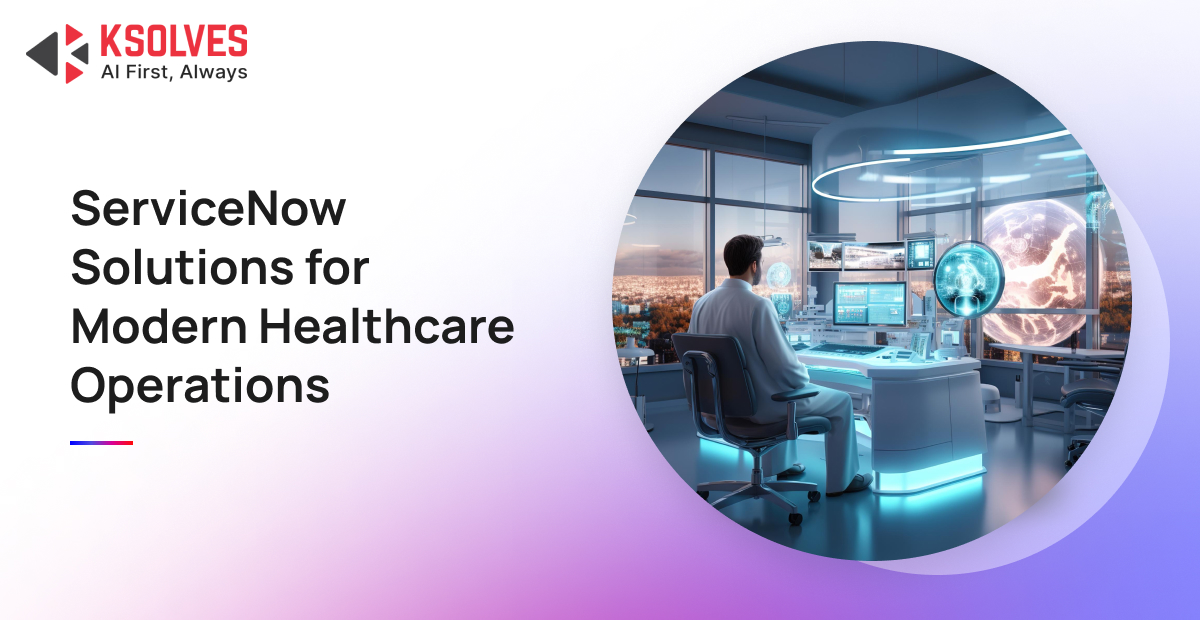
“We’ve invested in digital transformation before, but every new platform seems to add another layer of complexity instead of simplifying healthcare operations.”
It’s a concern shared by many healthcare CIOs and IT leaders. While digital transformation is essential, many implementations still result in disconnected workflows, integration challenges, compliance risks, and added pressure on IT teams.
According to IBM’s Cost of a Data Breach Report, the average healthcare data breach costs more than USD 10 million, making healthcare the most expensive industry for cybersecurity incidents for the fourteenth consecutive year.
This is why ServiceNow for healthcare has become a strategic solution for streamlining IT operations, improving service delivery, and supporting digital transformation. However, implementing ServiceNow in a hospital is fundamentally different from implementing it in other industries.
A successful ServiceNow GRC implementation, therefore, requires more than technical expertise. It demands careful planning, healthcare-specific workflows, regulatory awareness, and a strategy that keeps patient care at the center of every decision.
Why Healthcare IT Management Operates on a Different Plane
Unlike most industries, healthcare IT directly supports patient care. A delayed password reset in a corporate office is an inconvenience, but an unavailable workstation in an emergency department or a disconnected patient monitor can delay clinical decisions and impact patient outcomes.
This is why ServiceNow for healthcare requires an implementation strategy built around clinical continuity, regulatory compliance, and always-on operations.
1. Healthcare Never Stops Operating
Hospitals run 24/7, leaving little room for planned or unexpected downtime. Critical systems such as Electronic Health Records (EHRs), laboratory information systems, and medical imaging platforms must remain continuously available to support clinicians.
A clear example is the NHS ransomware attack (WannaCry), which disrupted more than 80 NHS trusts, leading to approximately 19,000 cancelled appointments and widespread operational disruption. The incident highlighted how even short periods of IT downtime can directly affect patient care and hospital operations.
2. Compliance Is More Than a Security Requirement
Healthcare organizations manage highly sensitive Protected Health Information (PHI), making regulatory compliance a core part of every IT decision. ServiceNow security implementations must be designed with HIPAA, audit readiness, encryption, and role-based access controls from the outset, not added later.
Healthcare organizations should ensure:
- Strong encryption for data at rest and in transit
- Comprehensive audit trails for every system activity
- Role-Based Access Control (RBAC) to restrict access to authorized users only
3. Integration Is Often the Biggest Challenge
Healthcare environments rarely rely on a single application. Most organizations operate a combination of Epic, Oracle Health (Cerner), MEDITECH, laboratory systems, PACS imaging platforms, medical devices, and cloud applications. Connecting these systems into one unified service management platform requires far more than standard IT integrations.
For example, Mayo Clinic’s cloud modernization initiative centralized access to more than 1.2 million patient records to improve interoperability, AI-driven insights, and secure collaboration across healthcare systems. Large-scale initiatives like this highlight why successful healthcare IT transformations depend on strong integration architecture rather than simply deploying another platform.
What Makes ServiceNow Healthcare Implementation Unique?
Unlike other industries, healthcare environments require ServiceNow healthcare implementation to integrate seamlessly with clinical applications, connected medical devices, regulatory frameworks, and mission-critical hospital operations.
Every architectural decision must support patient safety, operational continuity, and healthcare IT compliance.
- EHR Integration with ServiceNow
Electronic Health Records (EHRs) such as Epic, Oracle Health (Cerner), and MEDITECH are the operational backbone of every hospital, but they are not designed to manage IT incidents, asset lifecycles, or infrastructure changes.
Integrating ServiceNow through FHIR (Fast Healthcare Interoperability Resources) and HL7 interfaces enables clinicians to report technical issues directly from their existing clinical environment.
Instead of leaving Epic or Cerner to submit an IT ticket, physicians and nurses can report issues without interrupting patient care. ServiceNow automatically captures user context, workstation ID, device information, and system telemetry before creating an incident, while masking Protected Health Information (PHI) to maintain HIPAA compliance.
- Medical Device Management and IoMT Visibility
Traditional IT discovery tools are designed to manage servers, laptops, virtual machines, and network infrastructure. Healthcare organizations, however, also rely on thousands of Internet of Medical Things (IoMT) assets, including smart infusion pumps, MRI scanners, CT systems, bedside telemetry monitors, ventilators, laboratory analyzers, and automated medication dispensing systems.
A healthcare-focused ServiceNow IT Operations Management (ITOM) implementation extends the Configuration Management Database (CMDB) to provide complete visibility across both IT infrastructure and biomedical assets.
Example: If the CMDB identifies that the switch supports 12 ICU telemetry monitors, ServiceNow can automatically classify the incident as a clinical priority, notify biomedical engineering teams, and accelerate response before patient monitoring is affected.
- Healthcare ITSM and Regulatory Compliance
Healthcare organizations operate under strict regulatory frameworks, making security and governance integral to every ServiceNow workflow. Every incident, problem, change request, knowledge article, and system log must comply with HIPAA and internal healthcare governance policies. A well-designed implementation should incorporate:
- Role-Based Access Control (RBAC) for clinicians, IT teams, biomedical engineers, and third-party vendors.
- End-to-end audit trails for every incident, approval, configuration change, and data access event.
- Encryption of Protected Health Information (PHI) both in transit and at rest.
- Automated approval workflows for high-risk infrastructure and clinical application changes.
Embedding compliance directly into ServiceNow reduces manual governance efforts while helping organizations remain audit-ready.
- Clinical Operations and Cross-Department Automation
Healthcare service management extends beyond traditional IT support. Modern hospitals require ServiceNow to orchestrate workflows across ITSM, ITOM, HR Service Delivery (HRSD), clinical engineering, facilities management, and biomedical services.
By connecting these functions through a unified platform, organizations can automate processes that previously relied on manual coordination. For example, if an MRI scanner becomes unavailable, ServiceNow can automatically:
- Generate an ITSM incident.
- Notify the biomedical engineering team.
- Escalate the issue based on clinical priority.
- Trigger maintenance workflows.
- Inform scheduling teams to reschedule affected patient appointments.
This reduces operational delays while ensuring clinical teams receive real-time updates throughout the incident lifecycle.
- Intelligent Change Management for Always-On Healthcare
Unlike other industries, hospitals cannot schedule routine maintenance without considering patient care. Upgrading an EHR application, patching a clinical server, or replacing a network device may affect operating theatres, emergency departments, or intensive care units if not carefully coordinated.
A healthcare-specific ServiceNow implementation uses Change Management, Change Approval Boards (CAB), dependency mapping through the CMDB, and automated risk assessments to evaluate how infrastructure changes impact connected clinical applications and biomedical assets before deployment.
This enables healthcare organizations to modernize their IT environment while minimizing operational disruption and maintaining continuous clinical availability.
What to Watch Out For: Critical Pitfalls in Healthcare IT Management
Deploying enterprise platforms in healthcare environments can hit major roadblocks if clinical realities are overlooked during initial planning.
Even the most advanced ServiceNow healthcare implementation can lose momentum if clinical workflows, compliance requirements, and operational realities aren’t considered from the outset. Here are five pitfalls healthcare organizations should avoid.
1. Over-Customization Instead of Scalable Configuration
One of the biggest implementation mistakes is over-customizing ServiceNow to satisfy every department’s unique request. Excessive custom code increases technical debt, complicates upgrades, and makes long-term maintenance expensive.
Instead, prioritize configuration over customization by standardizing workflows wherever possible and validating them with both IT and clinical teams before deployment.
2. Treating HIPAA Compliance as a Final Step
ServiceNow HIPAA compliance should be embedded into the platform architecture, not added after implementation. Waiting until go-live to configure security controls often leads to costly redesigns and compliance gaps.
Protect the platform from day one by implementing:
- Role-Based Access Control (RBAC)
- PHI masking and data protection
- Secure integration channels
- Comprehensive audit trails across incidents and change requests
3. Ignoring the Clinical User Experience
Healthcare professionals work in fast-paced environments where every second matters. If reporting an issue requires multiple screens, manual asset selection, or lengthy forms, clinicians are more likely to call the helpdesk or bypass the process altogether.
Design simple, context-aware experiences using Single Sign-On (SSO), mobile access, barcode scanning, and automated device identification to reduce friction during incident reporting.
4. Underestimating Integration Complexity
ServiceNow rarely operates in isolation within a healthcare environment. Integrating Epic, Oracle Health (Cerner), MEDITECH, laboratory systems, imaging platforms, and IoMT devices requires careful planning, governance, and interoperability standards such as FHIR and HL7.
Poor integration planning often results in disconnected workflows, duplicate data, and limited operational visibility.
5. Skipping Testing in Real Clinical Environments
Testing workflows in a non-clinical environment is rarely enough. ServiceNow processes should be validated using real hospital scenarios involving clinicians, biomedical engineering teams, IT operations, and support staff before production deployment.
Simulating high-priority incidents, medical device failures, and EHR-related service requests helps identify workflow gaps early, reducing operational risks after go-live.
A Strategic Framework for Healthcare IT Leaders
A successful ServiceNow healthcare implementation requires a structured approach that aligns technology with clinical operations, compliance, and long-term scalability.
| Stage | Focus | Outcome |
| 1. Plan Clinical Workflows | Map workflows with clinicians, biomedical engineers, and IT teams before implementation. | Reduces rework and improves user adoption. |
| 2. Build Compliance First | Configure HIPAA, RBAC, encryption, and audit controls from day one. | Minimizes security and compliance risks. |
| 3. Test & Automate | Validate workflows and automate routing, approvals, and repetitive tasks. | Improves efficiency and service response times. |
| 4. Optimize & Scale | Monitor adoption, refine workflows, and manage releases through continuous improvement. | Maximizes platform performance and long-term ROI. |
Final Thoughts
A successful ServiceNow healthcare implementation isn’t measured by how quickly the platform goes live, but by how effectively it improves clinical operations, strengthens compliance, and supports uninterrupted patient care.
At Ksolves, we help healthcare providers design, implement, integrate, and optimize ServiceNow solutions that reduce operational complexity while delivering measurable business outcomes. Whether you’re planning a new implementation or modernizing an existing ServiceNow environment, our experts ensure your platform is secure, scalable, and built for long-term success.
Ready to build a healthcare IT ecosystem that supports both your teams and your patients? Book a free consultation with Ksolves today and discover how our healthcare-focused ServiceNow experts can help you accelerate implementation, minimize risk, and maximize platform value.
Frequently Asked Questions
1. How long does a ServiceNow healthcare implementation typically take?
The timeline depends on the number of integrations, workflows, compliance requirements, and hospital locations. Most enterprise healthcare implementations are delivered in phases to minimize disruption to clinical operations.
2. Can ServiceNow integrate with Epic, Oracle Health (Cerner), and MEDITECH?
Yes. ServiceNow supports integration with leading EHR platforms through FHIR, HL7, APIs, and integration hubs, enabling seamless incident management, workflow automation, and data exchange.
3. How does ServiceNow help healthcare organizations maintain HIPAA compliance?
ServiceNow supports HIPAA compliance through role-based access control (RBAC), audit trails, encryption, data governance, and secure workflow management to protect Protected Health Information (PHI).
4. Can ServiceNow monitor medical devices and IoMT assets?
Yes. By combining ServiceNow IT Operations Management (ITOM) with a centralized CMDB, healthcare organizations can monitor connected medical devices, biomedical assets, and supporting infrastructure to improve visibility and incident response.
5. Why partner with Ksolves for ServiceNow healthcare implementation?
Ksolves delivers end-to-end ServiceNow consulting, implementation, integration, customization, migration, and support tailored to healthcare. Our experts help organizations integrate clinical systems, automate workflows, strengthen compliance, and build scalable ServiceNow environments that improve operational efficiency and patient care.
 Shivam Yadav
Picture the way most HR teams still run. An employee has a question about a deduction on their payslip, so […]






























AUTHOR
ServiceNow
Shivam Yadav, a Senior Software Engineer at Ksolves, with 4+ years of experience, specializing in Health Cloud and Salesforce development. A 4× Salesforce Certified expert (PD1, PD2, SFCC B2C DEV, Associate), he excels in React Native, Java, Python, and C++.
Share with