



5 Ways to Measure and Report Social Impact with Salesforce Nonprofit Cloud
Nonprofit Cloud
5 MIN READ
August 19, 2026

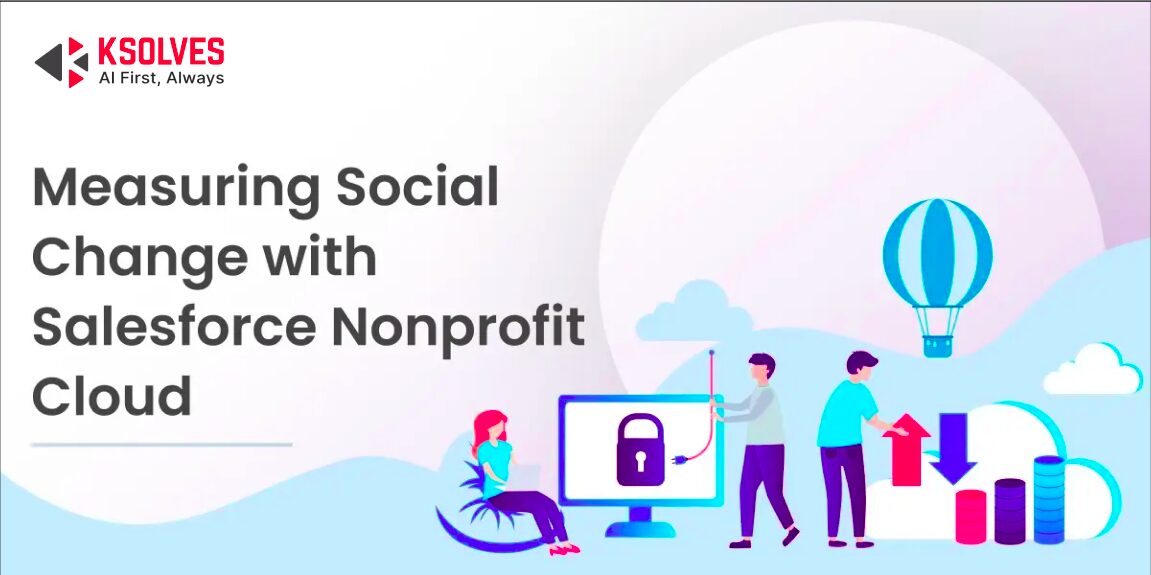
Every nonprofit tells stories of change, but in today’s data-driven world, donors and stakeholders expect proof, not promises. Measuring real-world outcomes is essential for transparency, trust, and long-term sustainability.
Many nonprofit organizations still rely on spreadsheets, manual tracking, and disconnected systems. These outdated tools make it difficult to capture the true scale of their impact, connect fundraising efforts with results, and make timely, informed decisions.
Salesforce for nonprofit organizations is transforming how impact is measured and shared. Salesforce Nonprofit Cloud helps organizations track programs, measure outcomes, and communicate impact with clarity and confidence.
The results show its effectiveness:
- 95% achieved a positive ROI
- 82% faster decision-making
- 34% greater team collaboration (Source)
Why Impact Measurement is Harder Than it Looks
Measuring social impact is more complex than it appears. Nonprofits often face several challenges that make it difficult to capture and report meaningful results:
- Data scattered across programs and teams: Information is often stored in multiple systems, spreadsheets, or silos, making it hard to get a complete view of activities and outcomes.
- Difficulty linking donations to outcomes: Tracking how donor contributions translate into measurable results can be cumbersome without an integrated platform.
- Limited visibility into long-term results: Nonprofits may struggle to monitor progress over time, evaluate program effectiveness, or identify areas for improvement.
That’s where Salesforce for nonprofit organizations comes in. By centralizing data, programs, and donor information, Salesforce Nonprofit Cloud provides a unified view of impact, helping organizations measure, report, and optimize their social initiatives with clarity and confidence.
5 Ways Salesforce Nonprofit Cloud Supports Social Impact Reporting
Discover how Salesforce Nonprofit Cloud helps organizations measure, track, and share their social impact more efficiently and transparently.
1. Unify All Program Data in One Place
Salesforce Nonprofit Cloud’s Program Management connects services, beneficiaries, and outcomes across all programs. Nonprofits can consolidate data from multiple initiatives, ensuring every activity, participant, and result is tracked in a single platform. This unified view allows organizations to understand who they serve, evaluate program effectiveness, and identify gaps in real time.
2. Track and Visualize Key Impact Metrics
With Outcome Management in Nonprofit Cloud, organizations can define, track, and report on key impact metrics such as volunteer hours, funds distributed, or individuals served. Customizable dashboards and reports allow teams to visualize progress in real time, eliminating the need to wait for quarterly summaries.
This enables nonprofits to identify trends, measure outcomes against goals, and make data-driven decisions that enhance program effectiveness and maximize social impact.
3. Automate Outcome Reporting
Salesforce’s Flow automation and AI tools help reduce manual data entry and streamline reporting processes. Outcome data can be automatically captured from multiple sources, processed, and presented in meaningful formats. This saves time for nonprofit teams so that they can focus on program delivery and strategic initiatives instead of administrative tasks.
4. Connect Fundraising with Mission Outcomes
Using Fundraising in Nonprofit Cloud, donations are directly linked to measurable program outcomes. Organizations can show exactly how contributions are being utilized, creating transparency for donors. This connection helps nonprofits demonstrate impact clearly, increasing donor confidence and encouraging sustained support.
5. Share Impact Transparently with Stakeholders
Through Experience Cloud portals and interactive dashboards, nonprofits can share real-time results with donors, partners, and volunteers. Stakeholders can see the tangible outcomes of programs, from the number of people helped to the funds utilized. This transparent approach builds trust, strengthens relationships, and reinforces the nonprofit’s credibility in reporting social impact.
Ready to Measure What Matters?
Conclusion: From Data to Meaningful Change
Measuring social impact is more than just tracking numbers; it’s about proving real mission success. Salesforce Nonprofit Cloud, combined with expert Salesforce professional services, enables nonprofit organizations to track outcomes, improve program effectiveness, and communicate achievements with clarity and confidence.
With Ksolves as your Salesforce implementation partner, you can customize the platform to your organization’s needs, streamline operations, and make your social impact measurable and meaningful. So, contact us today at [email protected] to learn how we can help your nonprofit!
FAQs
Q1. What is Salesforce Nonprofit Cloud?
Salesforce Nonprofit Cloud is a platform designed for nonprofit organizations to manage programs, donations, volunteers, track outcomes, and measure social impact effectively. It centralizes data, automates workflows, and provides actionable insights to improve decision-making.
Q2. How can Salesforce help measure social impact?
Salesforce Nonprofit Cloud’s Outcome Management allows nonprofits to unify program data, track KPIs, automate reporting, link donations to outcomes, and share results transparently with donors and stakeholders.
Q3. What are the key benefits of using Salesforce for nonprofit organizations?
Key benefits include faster reporting, increased team collaboration, improved donor trust, better resource allocation, and the ability to make data-driven decisions.
Q4. Can Ksolves help implement Salesforce Nonprofit Cloud?
Yes. Ksolves provides expert Salesforce professional services, helping nonprofits customize, deploy, and optimize Salesforce Nonprofit Cloud for maximum social impact.
Q5. Is Salesforce suitable for small nonprofits?
Absolutely. Salesforce Nonprofit Cloud scales according to organizational size, allowing even small nonprofits to track impact efficiently and improve operations.































Author
About the Author Editorial Team The Ksolves Editorial Team includes certified Salesforce experts, Big Data engineers, AI/ML specialists, Zoho consultants, and experienced technology writers focused on delivering clear, actionable insights for modern businesses. With hands-on experience across Salesforce, Big Data platforms, AI/ML solutions, application development, software testing, and Zoho ERP/CRM, the team publishes practical guides, real-world use cases, and industry updates that support smarter decisions and faster growth. Every article is created to solve business challenges, guide technology adoption, and keep organizations aligned with evolving digital ecosystems.
Share with