



Agentforce Voice in the Call Center: Implementing Natural-Language Service
Agentforce
5 MIN READ
August 20, 2026

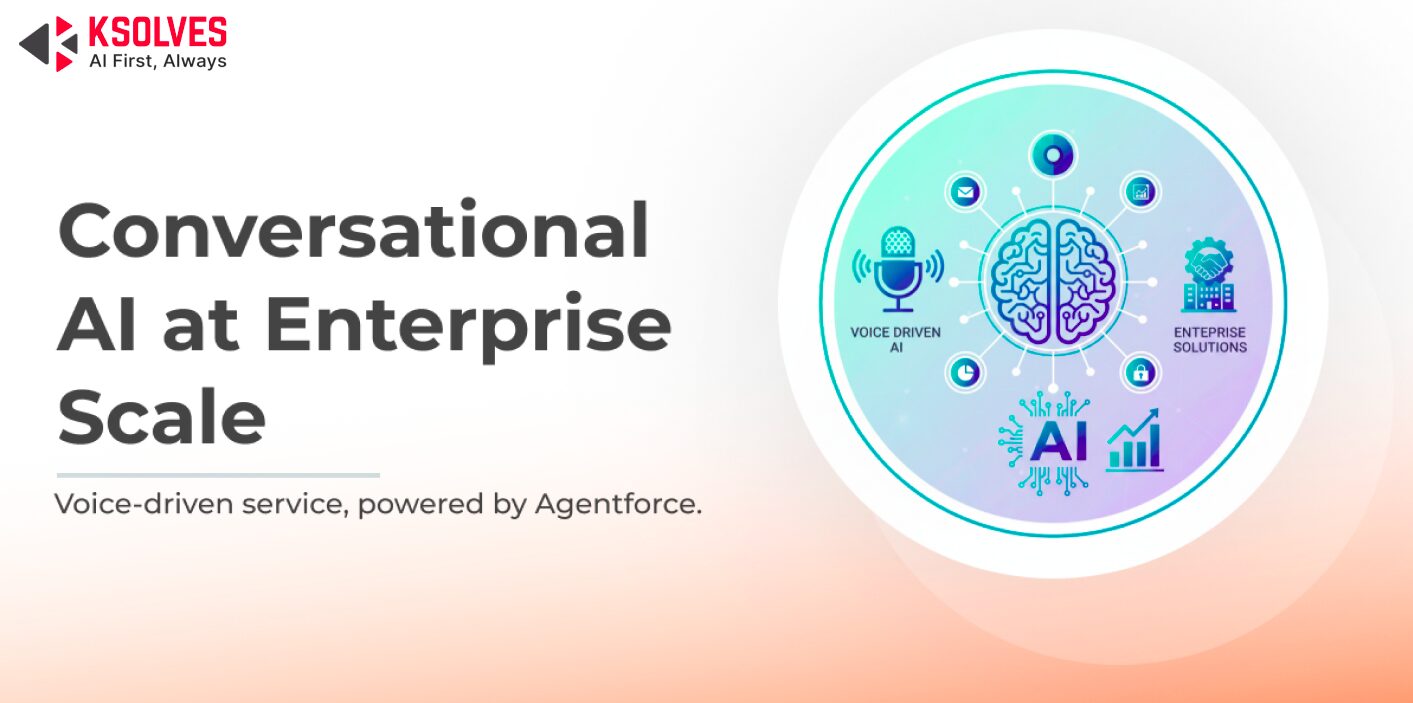
Call centers are facing unprecedented pressure as customer inquiry volumes grow and expectations for instant, personalized support continue to rise. Studies show that over 76 percent of customers expect companies to understand their needs and context during service interactions. In comparison, more than 60 percent of calls are abandoned due to long wait times or complex IVR menus.
Traditional call center setups built around rigid IVRs, scripted responses, and manual call handling struggle to meet these expectations. These systems often frustrate customers, increase average handling time, and place a heavy cognitive load on agents, limiting their ability to focus on complex or high-value conversations.
Voice-based AI powered by natural-language understanding is reshaping this model. By enabling systems to understand intent, context, and conversational speech in real time, AI-driven voice solutions are making customer interactions faster, more natural, and more efficient, positioning voice AI as the next major evolution in contact center operations.
What is Agentforce Voice?
Agentforce Voice is a Salesforce capability that brings natural, AI-driven voice interactions into contact center operations. Built on Salesforce’s AI ecosystem, Agentforce Voice enables organizations to handle customer calls using conversational AI that understands intent, context, and language in real time. Instead of relying on rigid call flows, it allows voice interactions to be guided by business logic, CRM data, and AI-powered decisioning directly within Salesforce.
Unlike traditional voice bots or IVR systems that depend on fixed menus and keyword-based routing, Agentforce Voice supports free-flowing conversations. Customers can speak naturally, explain their issues in their own words, and be guided to the right resolution without navigating multiple prompts. The system can automatically surface relevant customer data, trigger workflows, and route calls intelligently, reducing handling time and improving first-call resolution.
At the core of Agentforce Voice is natural language understanding and intent recognition. NLU enables the system to interpret what the customer is saying, while intent recognition identifies the purpose behind the request, such as account inquiries, service issues, or appointment changes. This allows Agentforce Voice to respond appropriately, automate routine tasks, and seamlessly hand off complex conversations to live agents with full context, creating a more efficient and human-like customer service experience.
How Natural-Language Service Works in Call Centers
Natural-language service in call centers follows a streamlined flow that mirrors how human agents understand and respond to customers. When a customer speaks, the system captures the voice input and converts it into text. Advanced intent detection then analyzes the request to understand what the customer wants, not just the keywords they use. Based on the identified intent, the system executes the appropriate action, such as fetching account details, updating a case, or triggering a workflow, and delivers a conversational response back to the caller in natural language.
A key strength of natural-language service is context awareness powered by CRM data. By leveraging customer history, past interactions, open cases, and preferences stored in the CRM, the system can personalize responses in real time. This allows callers to avoid repeating information and enables more relevant, efficient conversations that feel continuous rather than transactional.
Behind the scenes, real-time decision-making and workflow automation ensure fast and consistent outcomes. The AI evaluates the request against business rules, data, and workflows to determine next steps instantly. Routine tasks can be resolved automatically, while complex issues are intelligently routed to the right agent with full context, reducing handle times and improving overall service quality.
Ready to Bring Conversational AI to Your Call Center?
Key Features of Agentforce Voice for Call Centers
These capabilities enable call centers to deliver faster, more personalized, and highly efficient voice-based customer support.
1. Conversational Voice Interactions Without Rigid Scripts
Unlike traditional IVRs that rely on predefined paths, conversational voice interactions allow customers to speak naturally and explain issues in their own words. Requests are understood based on intent rather than keywords, creating more flexible, human-like conversations that adapt as the interaction evolves.
2. Intelligent Call Routing and Escalation
Calls are analyzed in real time to determine intent, urgency, and customer context. Based on this understanding, interactions are routed to the most suitable agent or team, while complex or high-priority issues are escalated automatically. This reduces unnecessary transfers and improves first-contact resolution.
3. Case Creation, Updates, and Resolution Through Voice
Service requests can be automatically converted into cases, with key details captured directly from the conversation. Case updates, status changes, and resolutions can happen during the call itself, reducing manual effort and ensuring accurate CRM records.
4. Seamless Integration with Salesforce Service Cloud and Data Cloud
Native integration with Service Cloud and Data Cloud enables access to a unified customer profile during every interaction. Historical cases, preferences, and real-time data are used to personalize responses and maintain consistency across service channels.
5. Real-time Agent Assistance and Call Summarization
Live agents receive contextual prompts, suggested actions, and relevant information while the call is in progress. After the interaction, automated call summaries and case notes are generated, minimizing after-call work and improving agent productivity.
Use Cases of Agentforce Voice in Real-World Call Centers
Agentforce Voice brings natural, conversational AI into everyday call center operations, handling routine interactions end-to-end while supporting agents during complex conversations. Below are common real-world scenarios where it delivers measurable impact.
1. Automated Resolution for High-Volume Queries
In many call centers, a large percentage of calls are repetitive. For example, a customer calls to check service availability or reset account credentials. Instead of navigating IVR menus, the caller explains the issue in plain language. The system understands the intent, retrieves the required information from Salesforce, completes the request, and confirms resolution within the same call, without agent involvement.
2. Voice-Based Appointment Scheduling and Updates
Consider a healthcare or service-based business where customers frequently call to book or modify appointments. The caller can request a new appointment, reschedule an existing one, or check availability. The system verifies details in Salesforce, updates the schedule in real time, and confirms the change verbally, reducing manual scheduling effort and errors.
3. Order and Billing Assistance Through Conversation
In retail or subscription-based businesses, customers often call for order tracking or billing clarification. When a customer asks about an order status or invoice amount, Agentforce Voice pulls the latest data from Salesforce and connected systems and responds instantly. If the caller asks follow-up questions, the conversation continues naturally without restarting the process.
4. Smart Escalation to Human Agents
Not every issue can or should be automated. For example, if a customer disputes a charge or reports a service outage, the system identifies the complexity and routes the call to the right agent. The agent receives a full summary of the conversation, customer history, and intent before answering, allowing them to focus on resolution rather than repeating questions.
5. Automatic Call Summaries and Follow-Up Actions
After a call ends, the interaction is automatically summarized and logged in Salesforce. Cases are created or updated, tasks are assigned, and follow-up emails or notifications can be triggered. This eliminates manual after-call documentation and ensures consistent, accurate records across the service team.
Implementing Agentforce Voice Successfully: Key Considerations and Best Practices
Deploying Agentforce Voice in a call center requires more than enabling voice capabilities. To deliver accurate, secure, and scalable natural-language service, organizations must plan implementation carefully and follow proven best practices.
1. Ensure High-Quality Voice Data and Model Training
Clear voice inputs are critical for accurate intent detection. Organizations should train Agentforce Voice using real call transcripts, common phrases, and industry-specific terminology. Continuous refinement based on live interactions helps improve recognition accuracy and ensures the system understands how customers actually speak, not just predefined scripts.
2. Design Intents and Conversations Around Real Use Cases
An effective natural-language service starts with well-defined intents and conversational flows. Instead of trying to automate everything at once, focus on high-volume, low-complexity scenarios such as order status, appointment changes, or account inquiries. Conversations should feel natural, with flexible phrasing, clear confirmations, and smooth transitions to human agents when needed.
3. Prioritize Security, Compliance, and Voice Data Governance
Voice interactions often involve sensitive customer information. Agentforce Voice should be configured with strong access controls, data masking, and compliance policies aligned with regulations such as GDPR, HIPAA, or industry-specific standards. Clear governance ensures voice data is stored, processed, and retained securely within the Salesforce ecosystem.
4. Monitor Performance and Optimize Continuously
Successful implementations treat voice AI as an evolving system. Teams should regularly track intent accuracy, call resolution rates, escalation frequency, and customer satisfaction. Insights from these metrics help refine conversational flows, improve automation coverage, and ensure Agentforce Voice continues to deliver better outcomes over time.
Agentforce Voice vs Traditional Call Center Solutions
Agentforce Voice represents a shift from scripted, menu-driven call handling to an intelligent, natural-language service that understands intent, takes action, and scales with customer expectations.
| Aspect | Traditional Call Center Solutions (IVR & Rule-Based Bots) | Agentforce Voice |
|---|---|---|
| Conversation Style | Menu-driven IVRs and scripted responses that require callers to follow fixed paths | Natural-language conversations that allow customers to speak freely and be understood |
| Intent Handling | Relies on predefined rules and keyword matching | Uses AI-powered intent recognition and contextual understanding |
| Customer Experience | Often frustrating due to long menus, repetitions, and rigid flows | More intuitive, conversational, and personalized interactions |
| Automation Capability | Limited to simple, predefined tasks | Executes complex actions such as case updates, order lookups, and workflow triggers |
| Context Awareness | Minimal or none across interactions | Leverages CRM data like customer history, preferences, and past cases |
| Scalability | Scaling requires manual updates to scripts and call flows | Scales easily as AI adapts to new intents and use cases |
| Adaptability | Changes require redevelopment and retesting of rules | Continuously improves through learning and optimization |
| Human Agent Handoff | Often abrupt, with loss of context | Intelligent escalation with full conversation context passed to agents |
| Operational Efficiency | Higher call handling time and agent dependency | Reduced call volumes and faster resolution through automation |
The Future of Voice-Driven Customer Service with Agentforce
Voice is rapidly becoming the preferred support channel as customers seek faster, more natural interactions without navigating apps or menus. With advances in natural-language understanding and real-time CRM access, voice interactions are evolving from basic support to full service execution. Enterprises will increasingly rely on voice to handle high-volume, time-sensitive requests while delivering personalized experiences at scale.
AI agents are moving beyond reactive call handling to proactive service delivery. Instead of waiting for customers to call, AI-powered voice agents can anticipate needs, trigger outbound calls, provide reminders, resolve issues before escalation, and guide customers through next steps. This shift turns call centers into value-driven service hubs rather than cost centers.
To stay competitive, enterprises must prepare for deeper AI integration across voice, data, and workflows. This includes investing in clean CRM data, well-defined service processes, AI governance, and seamless integration between voice systems and core platforms like Salesforce.
How Ksolves Helps You Succeed with Agentforce Voice
Ksolves helps enterprises move from voice automation concepts to real-world execution using Salesforce Agentforce Voice. Our experts work closely with your teams to design, implement, and optimize natural-language voice experiences that align with your service processes and customer expectations.
We start by assessing your call center workflows, data readiness, and Agentforce Service (Service Cloud) setup to define high-impact voice use cases. From intent design and conversational flows to CRM-driven context awareness, we ensure Agentforce Voice integrates seamlessly with your existing Salesforce ecosystem.
Ksolves also focuses on governance, security, and scalability. We help you establish voice data policies, compliance controls, and performance monitoring frameworks to ensure AI-driven voice interactions remain accurate, secure, and trustworthy over time.
Beyond SF implementation services, we provide continuous Salesforce optimization and support. As customer behavior evolves, we refine intents, improve automation coverage, and enhance AI-driven decisioning so your voice channel delivers consistent value, lower call handling effort, and better customer experiences.
With Ksolves, Agentforce Voice becomes more than a call center enhancement. It becomes a scalable, intelligent service channel that grows with your business.
Conclusion
Voice-driven customer service is no longer a futuristic concept — it’s a practical necessity for call centers looking to meet rising customer expectations while managing operational costs. Agentforce Voice transforms traditional call handling by replacing rigid IVR systems with intelligent, conversational AI that understands intent, leverages CRM data, and resolves issues in real time. This shift enables organizations to automate high-volume queries, reduce wait times, and empower agents to focus on complex, high-value interactions that drive real business value.
As customer preferences continue to shift toward faster, more natural interactions, voice AI will become central to competitive service delivery. With expert Agentforce consulting services from Ksolves, you can accelerate your Agentforce voice implementation with confidence. Our team ensures your Agentforce Voice deployment is strategically designed, securely implemented, and continuously optimized to deliver measurable business outcomes. The question is no longer whether to adopt voice AI, but how quickly you can implement it effectively to stay ahead, and Ksolves is here to help you succeed. This work draws on our broader AI/ML services, spanning intent modeling, data readiness, and automation design.
FAQs
What is Agentforce Voice used for?
Agentforce Voice is used to power natural, AI-driven voice conversations inside a Salesforce-connected call center. It lets customers speak in their own words, while the system understands intent, pulls relevant CRM data, and takes action such as updating a case or completing a request.
What happens if Agentforce Voice misunderstands a customer’s request?
When intent detection is uncertain, Agentforce Voice is designed to escalate the call to a human agent rather than force an incorrect action. The agent receives the conversation summary and customer context so the handoff feels seamless instead of starting over.
How do you implement Agentforce Voice in an existing call center?
Implementation typically starts by identifying high-volume, low-complexity use cases like order status or appointment changes, then training the system on real call transcripts and CRM data. Ksolves approaches this through a phased rollout that layers in governance, security, and performance monitoring before scaling to more complex intents.
How is Agentforce Voice different from a traditional IVR system?
Traditional IVR systems rely on fixed menus and keyword matching, forcing callers through rigid paths. Agentforce Voice instead uses AI-powered intent recognition and CRM context, letting customers speak naturally while the system handles complex actions like case updates and workflow triggers.
How long does it take to deploy Agentforce Voice?
Timelines vary with the number of intents and integrations involved, but most organizations start with a narrow set of high-volume use cases to reach a working deployment faster. Broader rollout across the full call center typically follows in phases as intent accuracy and automation coverage improve.
Who should companies work with to deploy Agentforce Voice?
Companies generally need a partner with hands-on Salesforce Service Cloud and Agentforce experience, not just general AI expertise. Ksolves works directly with call center teams to design intents, integrate CRM data, and set up the governance needed for a secure, scalable voice deployment.
Does Agentforce Voice work with existing CRM data?
Yes, Agentforce Voice is built to draw on existing Salesforce CRM data such as case history, preferences, and past interactions in real time. This context awareness is what lets it personalize responses and avoid asking callers to repeat information they’ve already provided.
Still have questions about Agentforce Voice? Contact our team.































Author
About the Author Editorial Team The Ksolves Editorial Team includes certified Salesforce experts, Big Data engineers, AI/ML specialists, Zoho consultants, and experienced technology writers focused on delivering clear, actionable insights for modern businesses. With hands-on experience across Salesforce, Big Data platforms, AI/ML solutions, application development, software testing, and Zoho ERP/CRM, the team publishes practical guides, real-world use cases, and industry updates that support smarter decisions and faster growth. Every article is created to solve business challenges, guide technology adoption, and keep organizations aligned with evolving digital ecosystems.
Share with