



How Android Dominates Global Mobile Usage: Unraveling the World’s Most Popular Mobile Platform
Mobile App Development
5 MIN READ
May 19, 2026

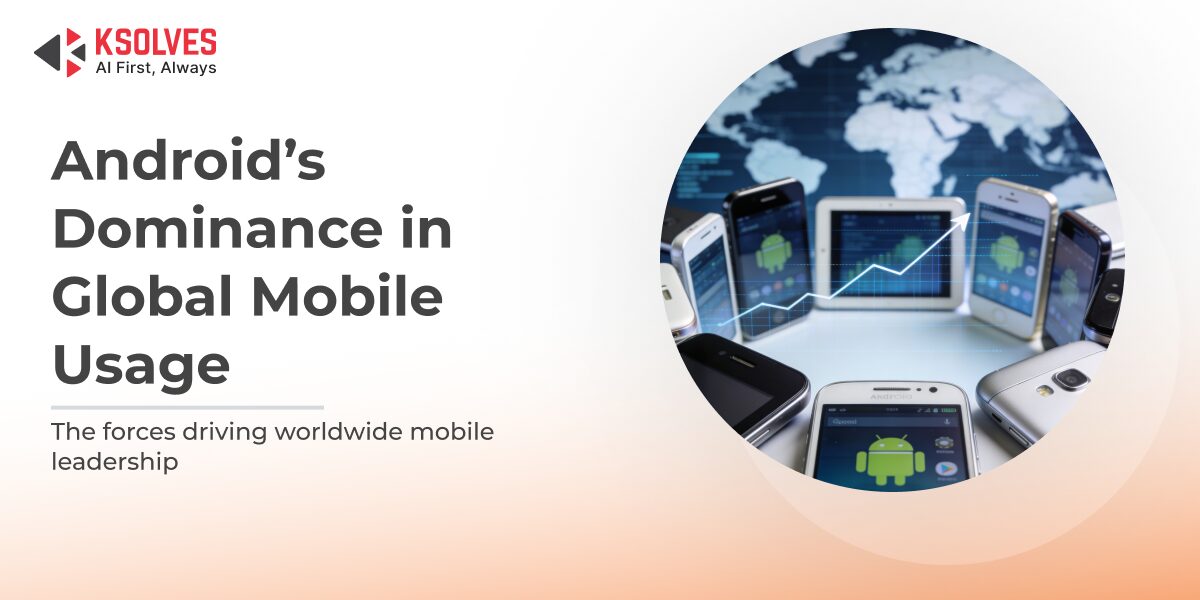
The global mobile ecosystem has become an integral part of everyday life, powering billions of connected experiences around the world, from communication and entertainment to enterprise productivity. Smartphones are no longer optional tools but essential digital gateways, making mobile operating systems a critical part of the technology landscape.
Among all mobile platforms, Android holds a clear leadership position as the most widely used mobile operating system worldwide. Its reach spans developed economies, emerging markets, and remote regions alike.
Hence, this blog explores how Android dominates global mobile usage by examining its market share, regional adoption trends, and the core factors that drive its widespread acceptance.
Android Market Share
Android continues to lead the global smartphone operating system market by a significant margin. According to a study, Android accounts for approximately 72 percent of the worldwide mobile OS market, while iOS holds under 30 percent. Hence, Android’s dominance becomes even more evident when regional data is analyzed. In Asia, Africa, and Latin America, Android adoption often exceeds 80 percent due to its affordability and wide device availability. Even in Europe, Android remains the preferred mobile OS across many countries.
Recent industry reports also highlight Android’s accelerated growth. The Drum reported a 270 percent increase in Android device usage over a two-year period, reinforcing its expanding footprint across global markets.
Key factors behind this large-scale adoption include competitive pricing, strong OEM partnerships, and the ability to address diverse user needs across income groups and geographies.
Key Reasons Behind Android’s Global Dominance
1. Open Source Ecosystem and Platform Flexibility
Android’s open source framework allows manufacturers and developers to customize the operating system extensively. This flexibility enables innovation, faster experimentation, and region-specific adaptations that closed ecosystems struggle to match.
2. Wide Device Range and Market Affordability
Android powers devices across every price segment, from entry-level smartphones to premium flagships. This wide range makes Android accessible to billions of users, particularly in price-sensitive markets where affordability directly influences adoption.
3. Manufacturer Support and Global OEM Network
A strong global network of OEMs such as Samsung, Xiaomi, Oppo, Vivo, and Motorola ensures Android devices are available in nearly every country. This widespread manufacturer support strengthens Android’s presence across diverse markets.
4. Customizable User Experience and Localization
Android offers extensive customization options for users and manufacturers alike. Support for local languages, region-specific apps, and adaptable interfaces makes Android highly relevant in multicultural and multilingual markets.
5. Massive App Ecosystem and Developer Accessibility
With millions of applications available on Google Play and other app stores, Android provides an unmatched variety and functionality. Its developer-friendly environment and flexible app publishing policies encourage faster innovation and broader participation.
6. Enterprise Adoption and Industry Use Cases
Android is widely used beyond consumer smartphones. It powers enterprise mobility solutions, POS systems, rugged devices, healthcare tablets, and logistics applications. Its adaptability makes it suitable for industry-specific use cases that require customization and control.
7. Alignment with Emerging Technologies
Android continues to evolve alongside emerging technologies such as 5G, artificial intelligence, foldable devices, and IoT integration. This forward compatibility helps Android remain relevant as mobile hardware and use cases continue to expand. Staying ahead requires understanding the broader mobile app development trends shaping the industry, including 5G integration, on-device AI, and the rise of foldable form factors that Android is uniquely positioned to support.
Building Scalable Android Applications with Ksolves
For businesses looking to tap into Android’s massive user base, partnering with a Custom Android App Development Company is critical. At Ksolves, we specialize in delivering scalable, secure, and future-ready Android applications tailored to your business goals.
Whether you’re launching a consumer-facing app, optimizing enterprise mobility solutions, or integrating advanced features like AI and IoT into your mobile strategy, Ksolves brings domain expertise, technical precision, and a user-centric approach to every project.
Choosing Ksolves as your Android development partner means benefiting from:
- Deep expertise in native and cross-platform Android development.
- Custom UI/UX design focused on engagement and performance.
- Scalable backend and cloud integration solutions.
- Ongoing support and maintenance aligned with your business growth.
Unlock the potential of the world’s most popular mobile platform with a trusted Android app development partner.
Conclusion
Android’s dominance in global mobile usage is driven by its open ecosystem, broad device availability, strong manufacturer partnerships, and continuous alignment with evolving technologies. Its ability to serve diverse user needs across regions and industries has positioned Android as the preferred mobile operating system worldwide.
For businesses looking to build scalable, future-ready mobile solutions, Android offers unmatched reach and flexibility. Partnering with Ksolves enables organizations to hire an expert Android developer who can transform Android’s global presence into meaningful digital experiences that support growth, innovation, and long-term success. Connect with our Android experts today!
Frequently Asked Questions
Why does Android have such a large global market share compared to iOS?
What makes Android the preferred mobile OS for enterprise and industrial use cases?
How does Android’s open-source model affect app development compared to iOS?
Is Android adoption growing in developed markets, or is it primarily dominant in emerging economies?
What technologies are shaping Android’s future as a mobile platform?
Should businesses build a native Android app or choose cross-platform development?
How long does it typically take to develop and launch a custom Android app?
 ksolves Team
Mobile applications have transformed the way customers interact with digital products. They function as persistent, high-frequency touchpoints that deliver personalized […]

























Author
About the Author Editorial Team The Ksolves Editorial Team includes certified Salesforce experts, Big Data engineers, AI/ML specialists, Zoho consultants, and experienced technology writers focused on delivering clear, actionable insights for modern businesses. With hands-on experience across Salesforce, Big Data platforms, AI/ML solutions, application development, software testing, and Zoho ERP/CRM, the team publishes practical guides, real-world use cases, and industry updates that support smarter decisions and faster growth. Every article is created to solve business challenges, guide technology adoption, and keep organizations aligned with evolving digital ecosystems.
Share with