



Telecom in the 5G Era: Why Legacy Systems Can’t Support New Revenue Models
Odoo
5 MIN READ
March 24, 2026

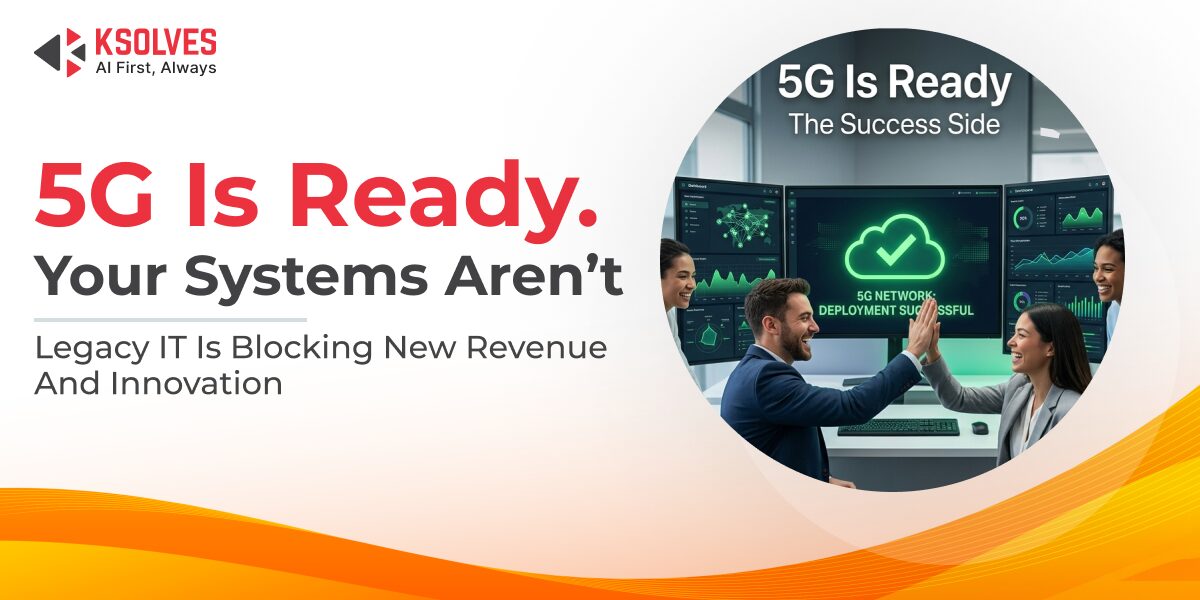
The telecom industry is entering a defining phase in which growth is no longer driven solely by traditional services like voice and data. With the rollout of 5G, telecom operators are expected to deliver high-value digital services, including IoT connectivity, edge computing, private networks, and enterprise-grade solutions. This shift is pushing telecom companies to rethink their role from connectivity providers to digital ecosystem enablers. However, while network capabilities are advancing rapidly, the supporting IT infrastructure often remains outdated. Many telecom operators still rely on legacy systems designed for a different era, limiting their ability to innovate and scale.
This blog explores why legacy systems are becoming a critical barrier in the 5G era, how they restrict new revenue models, and what telecom companies must do to enable successful 5G monetization.
The Reality Check: Legacy Systems Are the Biggest Roadblock
A study published through academic and industry-backed research indicates that nearly 48% of telecom executives identify legacy systems as a primary barrier to digital transformation. This highlights a critical issue. While telecom companies are investing heavily in 5G infrastructure, their backend systems are not equipped to support the shift toward digital revenue models.
Legacy systems were originally built to support traditional telecom services such as voice and SMS billing. They operate on rigid architectures, rely on batch processing, and lack the flexibility required for real-time service delivery. As a result, telecom providers struggle to translate 5G capabilities into tangible business outcomes.
Why Legacy Systems Fail in the 5G Era
1. Inability to Support Dynamic Pricing Models
5G introduces complex monetization strategies such as usage-based billing, subscription tiers, and service-level agreements. Legacy billing systems cannot efficiently handle these models, especially in real time.
2. Limited Real-Time Capabilities
Modern 5G use cases demand instant data processing and decision-making. Legacy systems rely on delayed processing, which impacts service quality and responsiveness.
3. Siloed IT Architecture
Traditional telecom systems operate in silos, making cross-departmental and cross-service integration extremely difficult. This slows down innovation and limits scalability.
4. Slow Service Innovation
Launching new services in a 5G environment requires speed and agility. Legacy systems introduce delays due to complex dependencies and manual processes.
5. Inconsistent Customer Experience
Today’s customers expect seamless digital interactions. Legacy systems make it difficult to deliver personalized and consistent experiences across channels.
The Rise of New 5G Revenue Models
The 5G ecosystem is enabling telecom operators to explore entirely new business opportunities:
1. Enterprise-Driven Models
Telecom providers are increasingly targeting enterprise customers with industry-specific solutions such as smart manufacturing and connected healthcare.
2. Network Slicing Services
Operators can offer customized virtual networks tailored to specific use cases, creating premium service tiers.
3. Private 5G Deployments
Enterprises are adopting private 5G networks to enhance security and performance, opening new revenue streams.
4. Platform-Based Ecosystems
Telecom companies are evolving into digital platforms that integrate third-party applications and services, expanding their value proposition.
Despite these opportunities, monetization remains challenging while legacy systems remain in place.
Competitor Analysis: What Most Blogs Miss
After analyzing top-ranking blogs on telecom digital transformation and 5G monetization, several critical gaps stand out:
1. Technology-Focused but Not Revenue-Focused
Most competitor content emphasizes 5G technology, AI, and IoT, but fails to clearly explain how these translate into revenue growth.
What you can add: A strong focus on revenue models and monetization strategies.
2. Minimal Focus on Backend Systems
Many blogs overlook the importance of core IT systems such as ERP and billing platforms in enabling transformation.
What you can add: Position backend modernization as a key driver of business success.
3. Lack of Practical Business Insights
Competitor blogs often remain theoretical, failing to address real-world challenges such as integration complexity, billing inefficiencies, or operational delays.
What you can add: Practical insights that resonate with telecom decision-makers.
4. Weak Service Integration for SEO
Most blogs do not effectively integrate service keywords into their content, missing an opportunity to rank for high-intent queries.
What you can add: Seamless inclusion of service offerings within the narrative.
Enabling 5G Monetization with Odoo ERP for Telecommunications
To fully capitalize on 5G opportunities, telecom operators need modern, integrated systems that can support evolving business models.
Odoo ERP for Telecommunications provides a unified platform that connects critical business functions and enables telecom companies to move beyond legacy limitations.
With Odoo ERP, telecom providers can:
- Support complex and flexible billing models
- Integrate CRM, operations, and service management
- Gain real-time visibility into business performance
- Automate processes to improve efficiency
- Accelerate the launch of new 5G-driven services
By replacing fragmented legacy systems with a scalable ERP solution, telecom companies can unlock new revenue streams and stay competitive in a rapidly evolving market.
Conclusion
The transition to 5G is not just a network upgrade. It represents a complete shift in how telecom companies operate and generate revenue. However, legacy systems remain a major barrier to this transformation.
To succeed in the 5G era, telecom operators must modernize their IT infrastructure and adopt platforms that enable agility, scalability, and innovation. Those who make this shift will be better positioned to capture new revenue opportunities and lead in the digital telecom landscape.































AUTHOR
Odoo
Share with