



AI in Quality Assurance: Advantages and Future Trends
QA
5 MIN READ
July 31, 2026

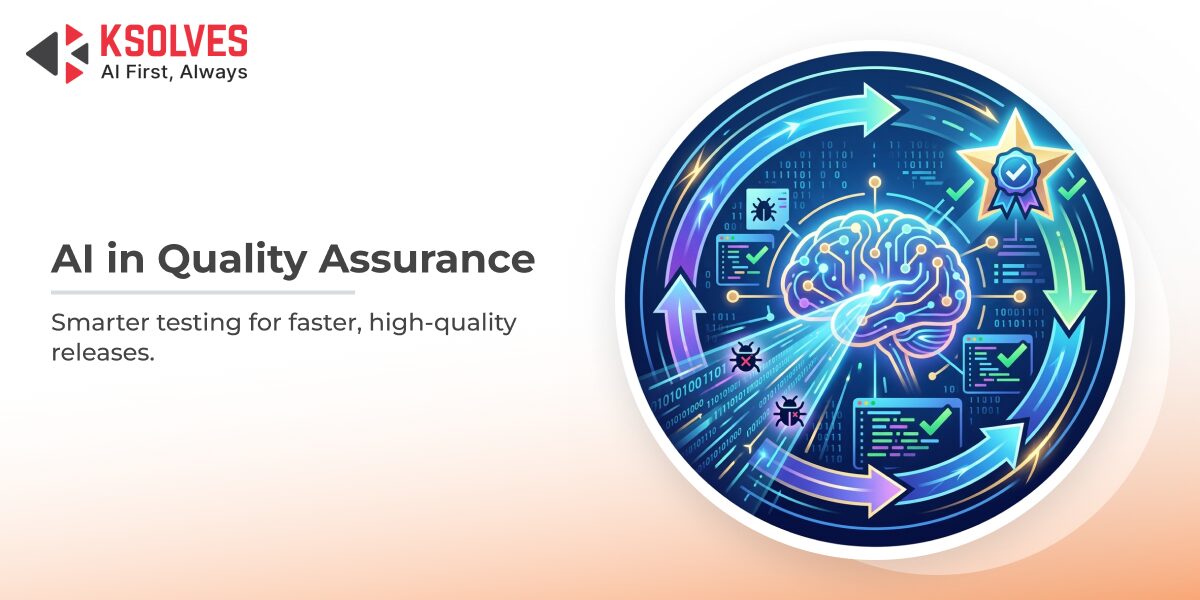
Every release pushes software into environments too complex for traditional testing alone. Modern applications evolve faster than manual validation cycles can keep up with, forcing QA teams to rethink how quality is achieved.
Artificial Intelligence is emerging as the layer that brings speed, adaptability, and intelligence into modern software testing. AI in Quality Assurance is no longer a future-state concept. It is actively reshaping how teams write tests, detect defects, manage regression cycles, and predict risk before a single line reaches production.
This blog breaks down the real advantages of AI in QA, the challenges teams face in adopting it, and the future trends that enterprise QA leaders cannot afford to ignore.
The Business Case: Why This Matters Now
U.S. companies spent $37 billion on generative AI in 2025 alone, and 71% of global Chief Information Officers stated their AI budgets would be frozen or cut if measurable value could not be demonstrated within two years.
This works through faster release cycles, fewer production defects, and significantly reduced testing overhead.
What Is AI in Quality Assurance?
AI in QA refers to the use of machine learning, natural language processing (NLP), and computer vision to automate, optimize, and intelligently manage software testing processes. Unlike rule-based automation that executes fixed scripts, AI-driven QA systems learn from historical test data, detect behavioral patterns, adapt to application changes, and generate test scenarios autonomously.
The result is a QA practice that is faster, more accurate, and far more scalable than traditional approaches.
Key Advantages of AI in Quality Assurance
1. Intelligent Test Generation
AI analyzes user stories, design assets, and application behavior to automatically generate comprehensive test cases. This eliminates the manual effort of writing scripts for every feature update and ensures that edge cases are never missed.
2. Self-Healing Automation
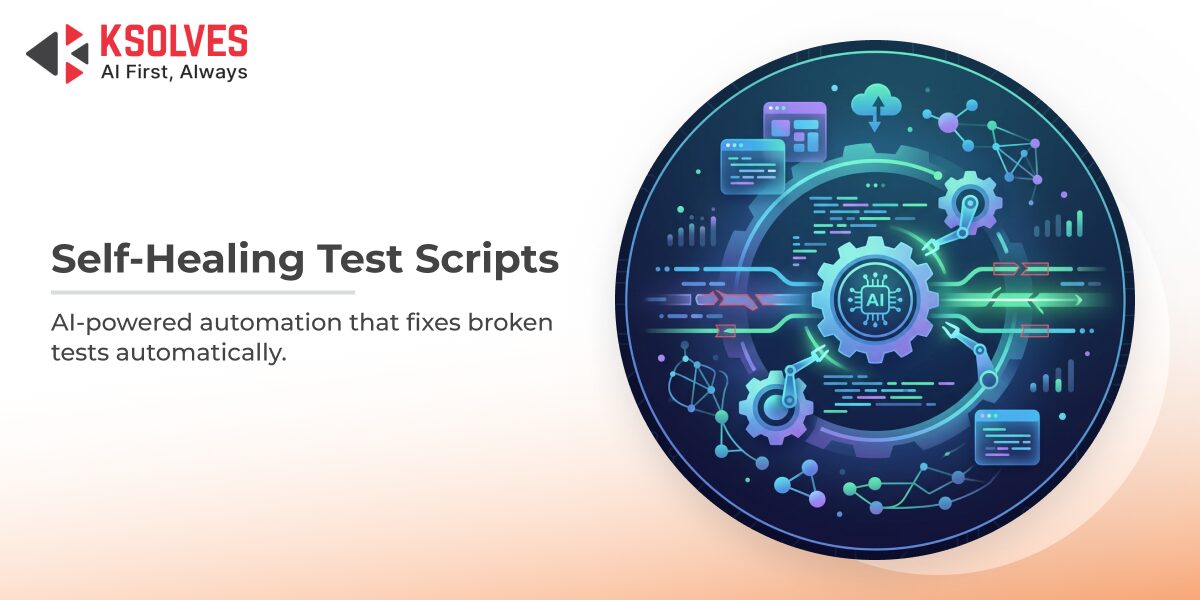
When UI elements change, traditional scripts break. AI-powered tools detect selector changes and automatically update scripts, slashing maintenance costs that typically consume 30 to 40 percent of QA team bandwidth.
3. Predictive Defect Detection
By analyzing code commits and historical defect patterns, machine learning models identify high-risk modules before testing begins. QA teams focus their efforts where failures are most likely, not everywhere equally.
4. Risk-Based Regression Testing
Instead of running full regression suites, AI prioritizes test execution based on risk score, reducing feedback cycles from hours to minutes without sacrificing coverage quality.
5. Industry-Specific Applications
In fintech, AI validates complex transaction flows and compliance rules at scale. In healthcare, it ensures HIPAA-compliant handling of test data. In ecommerce, it tests dynamic pricing, cart behavior, and checkout flows across thousands of device-browser combinations simultaneously.
Challenges of AI in QA
Adopting AI in QA is not friction-free. Common challenges include:
- Data dependency: AI models need clean, sufficient historical test data to be effective. Teams with sparse test histories face a cold start problem.
- Tool integration complexity: Embedding AI into existing CI/CD pipelines requires careful planning and, at times, significant refactoring.
- Skill gaps: QA engineers need upskilling in AI concepts, prompt engineering, and data interpretation to realize the full value of these tools.
- Over-automation risk: Automating everything without human oversight can lead to tests that pass while missing real business-logic failures.
Future Trends in AI-Powered QA
1. Autonomous QA Agents
Multi-agent systems will independently plan, generate, execute, and analyze tests end-to-end, adapting to application changes without human input.
2. Synthetic Test Data at Scale
AI will generate privacy-compliant synthetic datasets that simulate real-world edge cases, addressing the data availability problem, particularly in regulated industries.
3. Intent-Driven Testing
QA teams will describe scenarios in plain English, such as “test checkout on mobile Chrome with an expired card,” and AI will interpret, execute, and validate the result autonomously.
4. Embedded Quality Intelligence
AI dashboards will move beyond pass/fail reports to predict feature stability, visualize defect hotspots by code area, and recommend targeted fixes before releases.
How Ksolves Helps Enterprise Teams Adopt AI in QA
Ksolves works with enterprise teams to design and implement AI-powered QA frameworks that integrate with existing DevOps pipelines. Our Software Test Automation Services cover intelligent test automation strategy, tool selection, CI/CD integration, and team enablement, all customized to your technology stack and release velocity.
We do not just deploy tools but build QA practices that scale. Connect with our AI-enabled QA experts today or send us your query at [email protected].
Conclusion
AI in Quality Assurance is the difference between shipping with confidence and shipping with fingers crossed. The advantages are real, the challenges are manageable, and the future belongs to teams that treat quality as an intelligent, continuous process rather than a gated phase.
Let AI Catch Bugs First
Frequently Asked Questions
What exactly does AI do differently in quality assurance compared to traditional test automation?
What happens if a company adopts AI in QA without addressing data quality first?
How do teams actually get started implementing AI-driven QA in their pipeline?
Is AI in QA a replacement for manual testing or a complement to it?
When will autonomous QA agents become a standard part of software testing?
Who should enterprise teams partner with to implement AI-powered QA frameworks?
Have more questions about AI-powered QA? Contact our team.































Author
About the Author Editorial Team The Ksolves Editorial Team includes certified Salesforce experts, Big Data engineers, AI/ML specialists, Zoho consultants, and experienced technology writers focused on delivering clear, actionable insights for modern businesses. With hands-on experience across Salesforce, Big Data platforms, AI/ML solutions, application development, software testing, and Zoho ERP/CRM, the team publishes practical guides, real-world use cases, and industry updates that support smarter decisions and faster growth. Every article is created to solve business challenges, guide technology adoption, and keep organizations aligned with evolving digital ecosystems.
Share with