

 Agentforce
 5 MIN READ


Picture a Tuesday morning at a mid-sized company. A sales rep has 40 open opportunities. Seven are overdue for a follow-up, two prospects replied over the weekend and nobody has noticed, and a renewal that looked safe in March has gone quiet. The CRM knows all of this. Every fact is in there, neatly stored. But knowing and doing are different things, and for thirty years CRM has only done the first one.
That’s the quiet truth about traditional CRM. It’s an excellent filing cabinet. It remembers what happened and it can remind you what to do next. Everything in between still depends on a person having the time, the memory, and the energy to act. When that fails, which it does constantly, deals slip, cases bounce around, and customers feel ignored.
I’ve spent a lot of time with teams who are tired of this. They don’t need more dashboards or generic Salesforce CRM implementation services that merely digitize old spreadsheets. They need the work to actually get finished.
The Gap Between a Good Answer and a Finished Job
The first wave of enterprise AI helped, but only up to a point. Traditional RAG vs agentic workflows show the divide clearly: copilots and chatbots are good at a single moment-draft this email, summarize this case, answer this question. Then the conversation ends and the AI forgets.
The integration of tools like the Agentforce Long-Horizon Runtime allows teams to achieve results that traditional methods fail to deliver.
Real business doesn’t work in single moments. A complex service issue takes days. A deal involves five stakeholders and three weeks of waiting on replies. An onboarding journey touches sales, finance, support, and legal. The hard part of this work is rarely thinking. It’s the persistence: following up, remembering, adjusting, and handing off to the right person at the right time.
That is the gap the “agentic enterprise” is trying to close, and two core capabilities highlighted in Salesforce’s Agentforce updates speak to it directly.
Agents That Work Like a Team
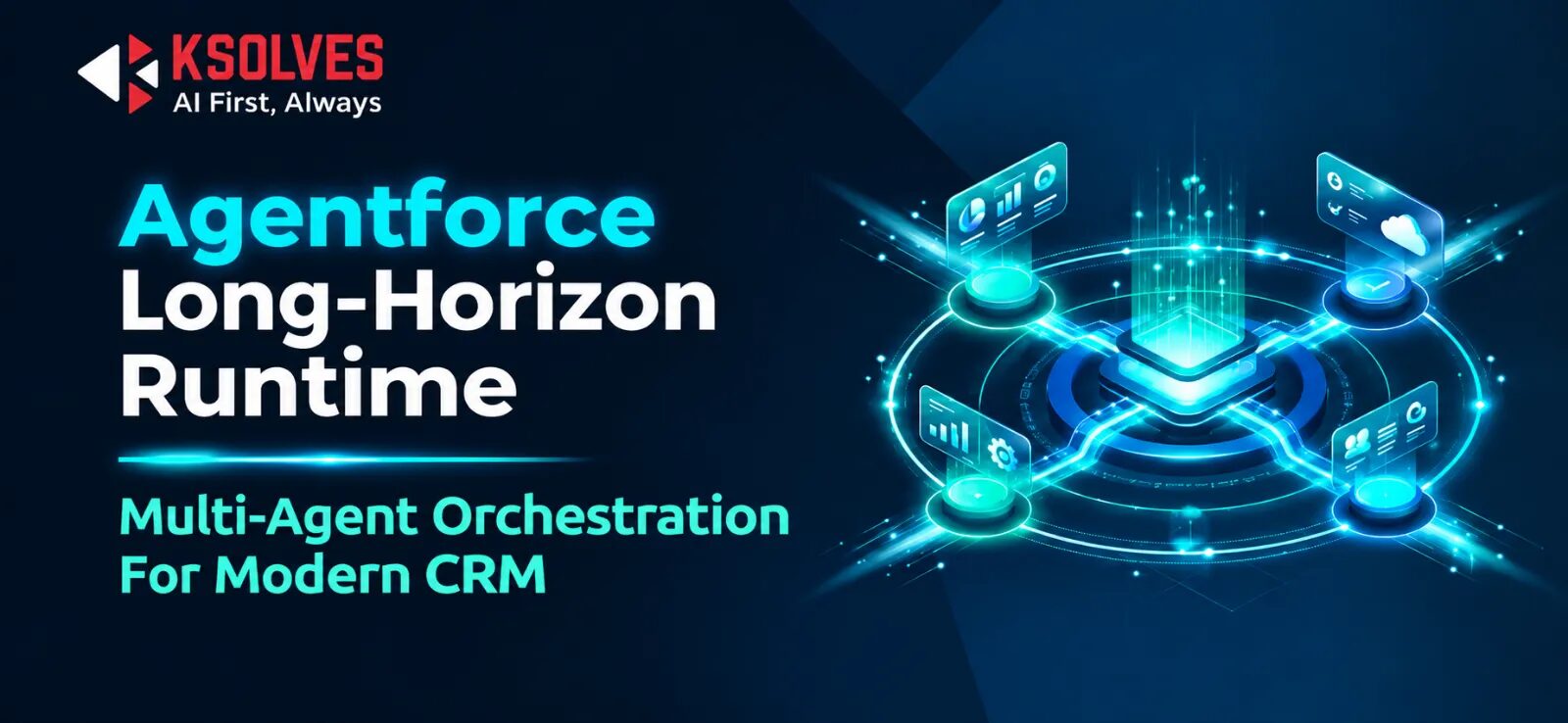
The first is Multi-Agent Orchestration. The idea is simple and very human. You wouldn’t ask your best salesperson to also run billing, troubleshoot network outages, and manage contracts. You’d build a team where each person is good at something specific.
Agentforce applies the same logic to digital workers. Instead of one agent trying to do everything, you have specialists, and orchestration routes work to the right one, passing along the context at each step, and coordinating the handoffs across systems and departments. As announced in Salesforce’s portfolio of job-ready AI agents, Salesforce offers pre-built agents for roles across sales, service, HR, and supply chain, so teams aren’t starting from a blank page.
Anyone who has ever repeated their problem to a third support agent knows why this matters. Handoffs are where customers lose patience and companies lose money. When the context travels with the work through dedicated Agentforce service implementation, the customer feels like they’re dealing with one organization instead of five departments.
Work That Doesn’t Stop When the Conversation Does
The second is the Long-Horizon Runtime, and honestly, this is the one I find most interesting.
It lets an agent hold onto a goal for days or weeks. It keeps context, adjusts its plan when things change, and keeps following up across a long, multi-step CRM process. Think about outbound sales. Today, a rep researches an account, sends a message, waits, forgets, remembers, follows up, gets a reply, tweaks the pitch, and loops in a colleague. Most of that effort isn’t judgment. It’s stamina and admin.
An agent with a long memory-like Salesforce’s outbound sales agent, Hunter-can carry that stamina. It holds the goal, say a qualified meeting on the calendar, works the sequence, notices when a prospect goes quiet, and changes approach. Renewals, collections, onboarding, and complex service cases all follow the same pattern.
“Without Humans” Is The Wrong Goal
I’ll say something that may sound odd in an article about automation. I don’t think the goal is to take humans out.
Salesforce is clear about this too. The long-running work is designed with deterministic checkpoints so people stay informed and in control. That’s not a limitation; it’s the whole point. Nobody sensible wants an AI quietly making promises to customers for three weeks with no one watching.
What changes is where people spend their time. Instead of chasing every follow-up, your people approve the important decisions, handle the exceptions, and build the relationships that no agent should be building for them. They move from doing every step to steering the system that does the routine ones. In my experience, that’s also the version employees get excited about, rather than the one they fear.
So Where Does The Money Actually Come From?
Executives will rightly ask this, and I’d rather give an honest framework than a flashy number. Value usually shows up in four places:
- More capacity from the same team: Routine multi-step work gets absorbed by agents, so people can take on more volume or move to work that needs a human.
- Faster cycles: Agents don’t wait for someone to find an hour. Leads convert sooner, cases close sooner, renewals land earlier.
- Fewer leaks: Every missed follow-up is revenue quietly walking out the door. Consistent follow-through plugs those holes.
- Less variation: Your best performer’s habits become the standard, instead of something only a few people do.
There’s also a compounding effect. Agentforce includes an Agent Optimizer-backed by practical Agentforce testing and optimization tips-that spots bottlenecks and recommends improvements, so agents can keep getting better rather than slowly drifting out of date. If you are building a business case for leadership, running your numbers through an Agentforce ROI calculator can help benchmark potential savings before writing a single line of configuration.
How I’d Start: a Practical Salesforce Implementation Guide
If a client asked me where to begin with agentic AI consulting services, I’d say this:
- Pick one workflow that is high volume, well understood, and easy to measure. Don’t start with the messiest process in the company. Focus first on one clear bottleneck where Salesforce implementation services can deliver a fast, measurable win.
- Get your data in order first. An agent is only as good as what it can see, and no amount of clever AI fixes fragmented records. Unifying customer context with Salesforce Customer 360 and Data Cloud ensures your agents act on accurate, real-time truth.
- Decide the rules early. Which decisions can an agent make alone? Which needs a human sign-off? Where are the checkpoints?
- Measure your starting point before you launch. If you don’t know today’s cycle time, you can’t prove tomorrow’s improvement.
- Then widen the scope as trust is earned. Trust built on real results travels a lot further than trust built on a slide deck.
The Bigger Shift
The question companies ask is changing. It used to be “which CRM should we buy?” Increasingly it’s “how much of our customer work can our systems finish on their own, safely?”
The companies that treat CRM as a database will keep paying talented people to move information between screens. The ones that treat it as a place where work actually gets done-and see how top companies using Agentforce are already operationalizing this-will build an advantage that’s very hard to copy. And it won’t come from replacing their people. It will come from finally giving them back the time to do the things only people can do.
Ready to turn your CRM into an autonomous execution engine? Connect with Ksolves’ Agentforce consulting services team for a workflow readiness audit and identify your highest-ROI pilot use case.
Frequently Asked Questions (FAQs)
1. What is Salesforce Agentforce’s Long-Horizon Runtime?
Long-Horizon Runtime is an Agentforce capability that enables AI agents to maintain context, track goals, and execute multi-step workflows across days or weeks—such as outbound sales sequences, renewals, and onboarding—while pausing at human-defined checkpoints for approvals.
2. How does Multi-Agent Orchestration differ from traditional CRM chatbots?
Traditional chatbots handle isolated, single-turn prompts and lose context once a session ends. Multi-Agent Orchestration coordinates specialized digital agents across departments (sales, service, billing, HR), automatically routing tasks and carrying full customer context from one step to the next without manual handoffs.
3. How can enterprises measure ROI before scaling Agentforce?
Organizations can measure Agentforce ROI by benchmarking baseline cycle times, follow-up leak rates, and rep capacity on a single high-volume workflow, using Salesforce’s built-in Agent Optimizer for ongoing tuning and an Agentforce ROI calculator to project cost and time savings.




 Abhinav Chadha