



Angular Security Best Practices Every Developer Should Know
Angular
5 MIN READ
September 2, 2026

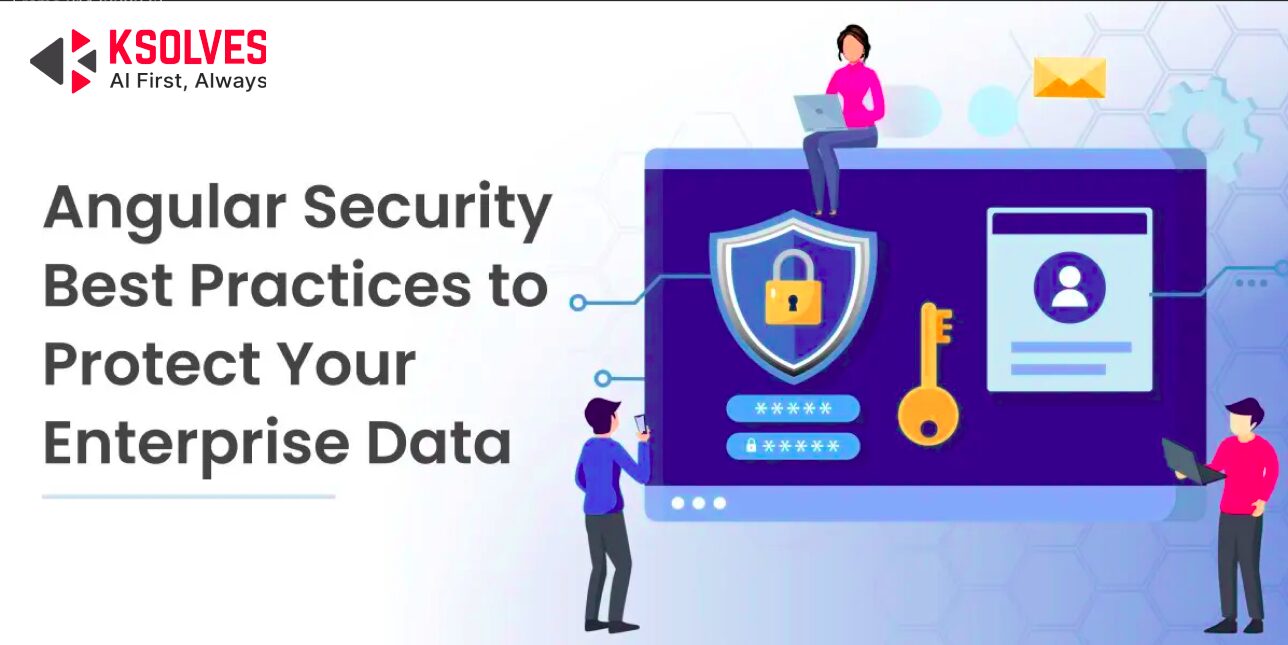
Security has become a critical pillar of modern web development. With applications handling sensitive data and complex user journeys, developers must ensure every layer is protected.
Angular already provides a strong security framework, but real safety comes from how you use it. Applying the right Angular security best practices helps reduce risks, prevent attacks, and build applications users can trust.
This article explores the most essential measures for improving Angular app security, along with practical steps your development team can implement today.
Understanding the Security Risks Around Angular Apps
Every web application faces threats, but Angular apps are often targeted by attackers because they handle large volumes of dynamic content. The most common risks include:
- XSS attacks through injected scripts
- CSRF manipulation
- Broken authentication and weak session handling
- Insecure API communication
- Vulnerable third-party dependencies
- Excessively permissive access control
Where Angular Stands Strong and Where Developers Must Stay Vigilant
Angular naturally protects developers from several common pitfalls: sanitization, template binding, and strict component architecture all help reduce vulnerabilities.
But these strengths can quickly weaken if developers override safeguards, trust external inputs too easily, or rely on insecure workflows.
Security in Angular is ultimately a partnership between the framework and the developer who uses it.
Best Practices That Make Angular Applications Truly Secure
Think of security not as a checklist but as a design principle. The more intentional you are at the architectural level, the less effort you spend firefighting later.
A. Designing the UI to Prevent XSS Instead of Fixing It Later
The strongest way to prevent XSS is to let Angular do what it does best: sanitize values and control DOM access. This means designing UI flows that avoid direct DOM manipulation. If a feature requires dynamic HTML, step back and ask: Is this really needed? Is there a safer alternative?
If not, then audit the data thoroughly before letting DomSanitizer handle it. Treat every piece of dynamic content, such as usernames, comments, URLs, and file previews, as suspicious until validated. This mindset alone eliminates a large portion of XSS vulnerabilities and significantly improves Angular app security.
B. Rethinking Authentication as Identity Management, Not Just Login
Strong authentication is more than secure login screens. Modern applications need identity flows that are resilient, distributed, and predictable.
The most reliable Angular authentication best practices include:
- Using standards like OAuth 2.0, OIDC, or JWT
- Storing tokens using HttpOnly cookies instead of local storage
- Implementing multi-layered route guards
- Using RBAC and confirming roles on the server, not just the UI
Identity should never be trusted purely on the frontend. Validation must happen on every request that accesses sensitive data or privileged actions. This layered approach ensures that even if one barrier cracks, the others stay firm.
For instance, Ksolves recently migrated a legacy healthcare platform’s authentication layer to a modern, JWT-secured architecture, replacing fragile AngularJS session handling with layered route guards and role validation.
C. Treating API Security as Part of the Frontend Strategy
Angular applications do not operate in isolation. APIs are extensions of the UI. If an API endpoint is unprotected, your Angular app becomes unprotected as well.
Interceptors help unify how requests are handled, attaching tokens, monitoring for anomalies, and managing errors consistently across the application.
When combined with HTTPS, backend validation, rate-limiting, and strict schema checks, they create a secure data pipeline from user action to server response.
D. Reducing Sensitive Data Exposure With a Minimalist Approach
One of the simplest yet most impactful Angular security tips is to store only what you absolutely need. Avoid:
- Saving tokens in local or session storage
- Caching unnecessary user information
- Embedding secrets or API keys in the frontend
Less stored data means less data to steal. It also reduces the damage an attacker could cause.
E. Using CSP as a Long-Term, Invisible Security Layer
A well-configured Content Security Policy quietly protects your Angular application long after development ends. It limits what scripts, styles, or iframes can load, effectively blocking entire categories of attacks without touching the application code.
Once set up, CSP becomes one of the most powerful long-term defenses you can apply.
Security Testing & Monitoring: Moving Beyond Spot Checks
Security shouldn’t be the final step before deployment. It should run continuously in the background, evolving with your application.
1. Early Testing as a Development Habit
Instead of waiting for QA sign-off, integrate security directly into the developer workflow:
- Automated linting for unsafe template patterns
- Build-time checks for vulnerabilities
- Dependency audits baked into CI/CD
This “shift-left” approach prevents issues from entering the codebase at all.
2. Automated Scanning + Human Insight for Full Coverage
Automated scanners catch routine vulnerabilities at scale, but real security comes when human testing is added on top. Penetration testing reveals weak logic paths, misconfigured permissions, and real-world flaws that automated tools skip.
Together, they form a complete view of application health.
3. Meaningful Monitoring, Not Noise
Monitoring becomes valuable only when configured intentionally.
Alerts for failed login spikes, repeated API access attempts, or unusual traffic patterns help identify attacks before they escalate. This makes the system proactive instead of reactive, preventing damage instead of responding to it.
4. Pen-Testing to Validate Real-World Resilience
Penetration testing brings a human perspective that automated tools miss. It exposes workflow-level weaknesses, misconfigured permissions, or UI interactions that may lead to logic flaws. When combined with automated testing, it creates a complete security picture.
Not Sure Your Angular App Is Fully Secure?
How a Trusted Angular Partner Strengthens Security
Building a secure Angular application requires more than applying best practices. It requires experience, pattern recognition, and the ability to anticipate risks before they become vulnerabilities. This is where a trusted Angular consulting company adds real value.
A dependable Angular consulting company brings a security-first perspective to every stage of development, including:
Architecture Reviews that Uncover Hidden Risks
Outsourcing Angular development services helps you evaluate how data flows through your system, how components interact, and where security gaps might exist. These reviews prevent structural vulnerabilities before they reach production.
Code Audits that Enforce Consistent Best Practices
Even small mistakes in Angular templates or services can create major security flaws. A seasoned partner identifies unsafe patterns, deprecated methods, and risky coding approaches that internal teams may overlook.
Secure API Design and Integration
APIs are often the biggest attack surface. A trusted partner ensures secure communication between frontend and backend, validates all interactions, and designs token flows that cannot be easily exploited.
Continuous Monitoring and Long-term Maintenance
Security needs to evolve with the application. Ongoing monitoring, timely dependency updates, vulnerability patching, and proactive improvements ensure your app stays protected even as threats grow.
Conclusion
Security is an ongoing process, not a one-time setup. When developers follow strong Angular security best practices, apply reliable Angular security tips, and use disciplined authentication flows, the result is an application that remains resilient, scalable, and trusted.
If you’re looking for expert guidance in building secure, enterprise-grade applications, Ksolves offers world-class Angular development services to help you maintain performance, scalability, and long-term protection.
For project inquiries or consultations, reach us at sales@ksolves.com, and our team will be happy to assist you.
FAQs
1. Why is security so important in Angular applications?
Angular apps often handle dynamic content and sensitive user data, which makes them potential targets for attacks. Following Angular security best practices ensures the application remains safe, stable, and trustworthy for end users.
2. What is the most common security threat in Angular?
XSS (Cross-Site Scripting) is one of the most common threats because it exploits unsafe HTML rendering. Angular’s built-in sanitization helps, but developers must avoid unsafe DOM manipulation and validate all dynamic inputs.
3. How can I secure authentication in my Angular application?
Use recommended Angular authentication best practices such as JWT or OAuth, store tokens in HttpOnly cookies, apply route guards, and validate permissions on both frontend and backend.
4. How do Angular interceptors help with security?
Interceptors centralize token handling, block unauthorized requests, log anomalies, and standardize error responses. This ensures consistent and secure API communication across the entire app.
5. How often should vulnerability scans and penetration testing be performed?
Automated scans should run continuously through CI/CD pipelines, while penetration testing is recommended at least quarterly or during major feature releases.
6. Can partnering with an Angular consulting company improve app security?
Absolutely. Experienced Angular specialists bring architectural reviews, secure API design, code audits, compliance expertise, and long-term monitoring to ensure your application stays secure as it scales.




































Author
About the Author Editorial Team The Ksolves Editorial Team includes certified Salesforce experts, Big Data engineers, AI/ML specialists, Zoho consultants, and experienced technology writers focused on delivering clear, actionable insights for modern businesses. With hands-on experience across Salesforce, Big Data platforms, AI/ML solutions, application development, software testing, and Zoho ERP/CRM, the team publishes practical guides, real-world use cases, and industry updates that support smarter decisions and faster growth. Every article is created to solve business challenges, guide technology adoption, and keep organizations aligned with evolving digital ecosystems.
Share with