
 Odoo
 5 MIN READ


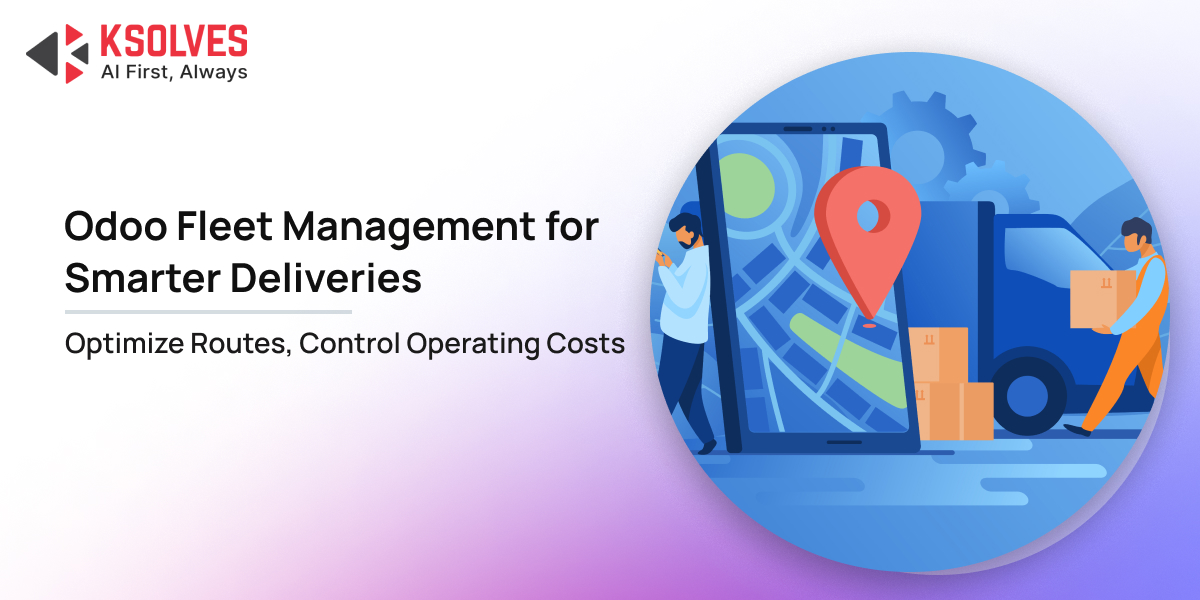
Last-mile delivery is often one of the most expensive stages of the supply chain. Fuel consumption, vehicle maintenance, inefficient routes, failed deliveries, and underutilized vehicles can quickly increase operational expenses. For logistics providers, distributors, and businesses managing their own delivery fleets, controlling these costs is essential to maintaining profitability.
Odoo Fleet helps businesses manage vehicles, track vehicle-related expenses, and organize maintenance activities. When combined with suitable route optimization and delivery planning solutions, it can support more efficient delivery operations, better fleet utilization, and improved cost visibility.
What Drives Up Last-Mile Delivery Costs?
Before implementing cost-saving measures, businesses need to understand the factors that increase delivery expenses.
- Inefficient Routes:
Poorly planned routes increase travel distances, fuel consumption, and delivery times. - High Fuel and Maintenance Expenses:
Frequent travel, inefficient vehicle usage, and unexpected repairs increase fleet operating costs. - Poor Vehicle Utilization:
Vehicles operating below capacity or remaining idle while others are overused create inefficiencies. - Failed Deliveries:
Incorrect addresses, unavailable customers, and scheduling issues lead to repeat trips and additional expenses. - Limited Cost Visibility:
Without consolidated expense and performance data, businesses may struggle to identify where delivery costs are increasing.
Addressing these challenges requires more than tracking vehicles. Businesses need to connect fleet management, delivery planning, and cost monitoring to make informed operational decisions.
Also Read: Odoo Field Service for Engineering Teams
How Odoo Fleet Management Helps Control Delivery Costs
Odoo Fleet provides tools to organize vehicle information, manage maintenance, and monitor vehicle-related expenses. These capabilities help businesses understand their fleet’s operating costs and identify opportunities to improve efficiency.
1. Vehicle Cost Tracking
Fuel, repairs, insurance, leasing, and other vehicle-related expenses contribute to the total cost of fleet operations. Odoo Fleet allows businesses to maintain vehicle records and track associated costs.
With this information, fleet managers can review expenses by vehicle, identify vehicles with unusually high operating costs, and make better-informed decisions about fleet utilization and replacement.
2. Maintenance Management
Unexpected vehicle breakdowns can disrupt delivery schedules, increase repair expenses, and require businesses to arrange alternative transportation.
Odoo Fleet supports vehicle maintenance tracking and service management. Businesses can maintain service records and organize maintenance activities to help reduce avoidable disruptions and keep vehicles operational.
3. Fleet Utilization
A fleet’s efficiency depends on how effectively available vehicles are used. Poor allocation can leave some vehicles underutilized while others carry excessive workloads.
By maintaining vehicle information, availability details, and related operational records in Odoo, businesses can improve fleet planning. When this information is combined with delivery planning tools, managers can make more informed vehicle allocation decisions.
4. Cost Visibility and Reporting
Understanding total fleet expenditure helps businesses identify where costs can be reduced.
Odoo Fleet provides access to vehicle-related records and cost information. Businesses can use this data, alongside delivery and accounting reports where appropriately configured, to evaluate expenses, compare vehicle operating costs, and identify recurring cost patterns.
How Route Optimization Reduces Last-Mile Delivery Costs
Route optimization helps businesses determine efficient delivery routes based on factors such as delivery locations, travel distances, vehicle capacity, and scheduling constraints. When supported by a suitable routing solution integrated with Odoo, it can help reduce unnecessary travel and improve delivery planning.
1. Shorter Delivery Routes
Poorly planned routes can cause drivers to cover unnecessary distances, revisit the same areas, or travel between distant delivery locations repeatedly.
Route optimization tools can organize delivery stops into more efficient sequences. Reducing unnecessary mileage can help lower fuel consumption, vehicle wear, and overall delivery expenses.
Also Read: Boosting Efficiency in Logistics and Supply Chain with List View Manager in Odoo
2. Lower Fuel Consumption
Fuel is a recurring expense for delivery fleets. Longer routes, unnecessary detours, and excessive travel between stops increase fuel consumption.
By helping planners reduce avoidable mileage, route optimization can contribute to lower fuel expenses. Actual savings depend on delivery density, traffic conditions, vehicle efficiency, and the quality of the route plan.
3. Improved Delivery Scheduling
Managing multiple deliveries across different locations can make scheduling complicated, particularly when businesses must meet specific delivery windows.
Routing solutions can help arrange delivery stops and schedules more efficiently. When integrated with relevant order and delivery information in Odoo, this can improve coordination between dispatchers and drivers.
4. Better Vehicle Allocation
Assigning the right deliveries to the right vehicles is important for controlling operating costs.
Route planning can consider factors such as vehicle capacity, delivery locations, and vehicle availability when these details are supported by the chosen solution. This helps businesses plan vehicle assignments more effectively and avoid unnecessary trips.
5. Fewer Repeat Deliveries
Failed delivery attempts can increase fuel expenses, driver workloads, and delivery costs.
Accurate customer addresses, clear delivery instructions, and better scheduling can help reduce avoidable delivery failures. Where supported by the delivery solution, customer notifications and delivery-status updates can further improve coordination.
However, route optimization alone cannot eliminate failed deliveries. Businesses must also address customer availability, address accuracy, and delivery communication.
Practical Scenario: How Route Optimization Reduces Last-Mile Delivery Costs
Consider a logistics company that manages daily deliveries across a city. One of its delivery vans has five orders to fulfill, but the driver follows the sequence in which the orders were received rather than considering the locations of each delivery.
This results in unnecessary backtracking, longer travel distances, and higher fuel consumption. To address this, the company integrates Odoo with a route optimization solution that reorganizes delivery stops based on their geographical locations.
Before and After Route Optimization
Let’s see how the delivery route changes after optimization.
Before Optimization: Manual Delivery Planning
The driver follows the original delivery sequence:
Warehouse → A → B → C → D → E → Warehouse
| Route | Distance |
|---|---|
| Warehouse → A | 8 km |
| A → B | 12 km |
| B → C | 10 km |
| C → D | 15 km |
| D → E | 10 km |
| E → Warehouse | 15 km |
| Total Distance | 70 km |
After Optimization: Location-Based Route Planning
The routing solution rearranges the delivery stops to minimize unnecessary travel:
Warehouse → A → C → E → D → B → Warehouse
| Route | Distance |
|---|---|
| Warehouse → A | 8 km |
| A → C | 5 km |
| C → E | 7 km |
| E → D | 4 km |
| D → B | 6 km |
| B → Warehouse | 8 km |
| Total Distance | 38 km |
By changing the delivery sequence, the company reduces the total travel distance from 70 km to 38 km, saving 32 km on a single delivery run.
What Does This Mean for Delivery Costs?
Assume the delivery van provides a mileage of 10 km per litre and the fuel price is ₹100 per litre.
| Cost Metric | Before Optimization | After Optimization |
|---|---|---|
| Distance traveled | 70 km | 38 km |
| Fuel consumed | 7 litres | 3.8 litres |
| Fuel expense | ₹700 | ₹380 |
| Fuel savings per run | — | ₹320 |
If the company completes 10 similar delivery runs daily over 26 working days, the potential savings would be:
- Daily fuel savings: ₹3,200
- Monthly fuel savings: ₹83,200
- Reduction in travel distance: 45.7%
Visualizing the Impact of Route Optimization
The following comparison shows how changing delivery sequences can reduce travel distance and fuel expenses.
Daily Travel Distance: Before vs. After
Monthly Fuel Savings
How Odoo Supports This Optimization
Odoo and its routing integration contribute to different parts of the process:
- Odoo Delivery Management:
Maintains delivery orders and customer address information required for route planning. - Odoo Fleet:
Maintains vehicle records and provides visibility into fuel and other fleet-related expenses. - Route Optimization Integration:
Uses delivery locations and relevant constraints to calculate efficient stop sequences. - Connected Workflows:
Helps coordinate delivery assignments, route information, and operational updates across systems.
Integrating Odoo Fleet with Routing and Delivery Solutions
Odoo Fleet helps manage vehicle information, maintenance, and related costs. Businesses that require advanced route planning may need to integrate Odoo with a compatible mapping, routing, or delivery management solution.
The integration connects relevant operational data and helps teams coordinate vehicle management with delivery planning.
How the Integration Works
A typical integrated workflow can follow these steps:
- Prepare Delivery Data:
Collect delivery orders, customer addresses, required delivery dates, and other relevant information in Odoo. - Retrieve Vehicle Information:
Use relevant vehicle details, such as capacity and availability, where supported by the integration. - Generate Optimized Routes:
Send the required delivery and vehicle data to a compatible routing solution to calculate suitable routes and stop sequences. - Coordinate Deliveries:
Make route assignments and delivery schedules available to dispatchers and drivers through the supported workflow. - Track Delivery Progress:
Record delivery statuses and operational updates in the relevant system, depending on the integration’s capabilities. - Review Performance:
Compare delivery activity, mileage, and operating expenses to identify opportunities for further improvement.
The exact workflow depends on the routing solution, Odoo version, integration design, and business requirements.
What Data Should Be Connected?
For effective coordination, businesses should evaluate whether their integration supports the following data:
- Delivery Orders:
Delivery addresses, order references, and required delivery dates. - Vehicle Information:
Vehicle availability and relevant capacity constraints. - Route Details:
Planned stops, route sequences, and estimated travel distances. - Delivery Status:
Updates on completed, pending, or unsuccessful deliveries. - Cost Information:
Vehicle expenses and other relevant operating costs for performance analysis.
Connecting the right data reduces manual coordination and helps businesses make better-informed delivery decisions.
Connect Your Fleet Management and Delivery Planning!
Key Metrics to Measure Last-Mile Delivery Cost Optimization
Implementing fleet management and routing integrations is only part of the process. Businesses must also measure performance to determine whether their changes are delivering meaningful improvements.
| KPI | What It Measures |
|---|---|
| Cost per Delivery | Total delivery operating costs divided by the number of deliveries completed. |
| Cost per Kilometer | Operating costs relative to the distance traveled by the fleet. |
| Fuel Cost per Delivery | Fuel expenses relative to completed deliveries. |
| Vehicle Utilization Rate | How effectively available vehicle capacity or operating time is being used, based on a consistent measurement method. |
| On-Time Delivery Rate | The percentage of deliveries completed within the promised delivery window. |
| First-Attempt Delivery Success Rate | The percentage of deliveries completed successfully on the first attempt. |
Businesses should establish a baseline before implementing changes and compare performance over consistent reporting periods. This helps them determine whether route improvements are reducing costs without compromising delivery quality.
Where the required data is available, Odoo reporting or connected business intelligence tools can help consolidate and analyze these metrics.
How Ksolves Helps Optimize Fleet and Delivery Operations with Odoo
Reducing last-mile delivery costs requires more than tracking vehicles. Businesses need connected workflows that bring fleet management, delivery planning, and cost visibility together. Ksolves, an AI-first Odoo development company, helps businesses configure, customize, and integrate Odoo to address delivery inefficiencies and streamline fleet operations.
With Odoo implementation and integration expertise, Ksolves can help you:
- Connect Fleet and Delivery Workflows:
Integrate relevant Odoo data with routing and delivery solutions to reduce manual coordination. - Optimize Delivery Planning:
Implement suitable routing integrations to support efficient route planning, stop sequencing, and vehicle allocation. - Improve Cost Visibility:
Configure reporting to help monitor vehicle expenses, delivery costs, and fleet performance. - Automate Operational Processes:
Streamline repetitive tasks and data exchange across connected systems to reduce manual effort. - Build for Your Business Requirements:
Customize Odoo workflows and integrations around your fleet size, delivery processes, and operational complexity.
The result is a more connected approach to fleet and delivery management, helping your business identify cost-saving opportunities, improve resource utilization, and make data-driven operational decisions.
Final Words
Reducing last-mile delivery costs starts with better fleet management, efficient route planning, and visibility into operating expenses. Odoo Fleet helps businesses manage vehicle-related costs and maintenance, while suitable routing integrations can improve delivery planning, reduce unnecessary mileage, and support better vehicle utilization.
With the right implementation and integration strategy, businesses can build more efficient delivery workflows and make informed decisions based on operational data. Ksolves helps you align Odoo with your fleet management and delivery requirements to identify inefficiencies and optimize operations.
Connect with our Odoo experts to explore the right solution for your business.