



Self-Hosted vs Frappe Cloud ERPNext: Which One Should You Choose?
ERPNext
5 MIN READ
April 13, 2026

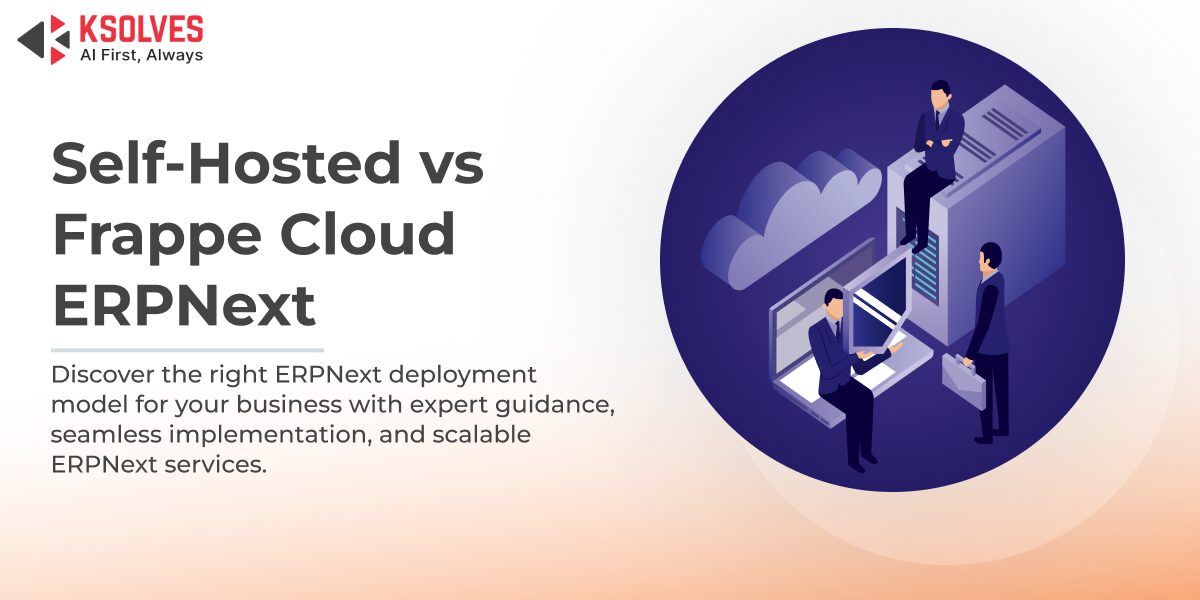
Choosing the right deployment model for your ERP system is just as important as choosing the ERP itself. ERPNext, being a flexible and open-source ERP platform, offers businesses two major deployment options Self-Hosted ERPNext and Frappe Cloud-Hosted ERPNext.
Each option comes with its own advantages, limitations, and ideal use cases. In this blog, we’ll break down both deployment models, compare them side by side, and help you decide which ERPNext setup best fits your business needs.
Understanding ERPNext Deployment Models
Before diving into comparisons, let’s understand what each deployment model means in practical terms.
What Is Self-Hosted ERPNext?
Self-hosted ERPNext is deployed on your own servers or private infrastructure. You have complete control over the system, including data storage, security policies, customizations, and upgrades. This model is often preferred by enterprises with strict compliance requirements or complex operational workflows.
What Is Frappe Cloud-Hosted ERPNext?
Cloud ERPNext is hosted on a Frappe Cloud platform such as AWS, Azure, or managed ERPNext Frappe Cloud services. The infrastructure, backups, monitoring, and server maintenance are handled by the service provider, allowing businesses to focus on operations rather than IT management.
Also Read – Top 10 Benefits of ERPNext for Small and Medium Businesses
Key Differences Between Self-Hosted and Frappe Cloud ERPNext
The table below highlights the major differences to help you evaluate both options quickly:
| Aspect | Self-Hosted ERPNext | Frappe Cloud ERPNext |
| Infrastructure Ownership | Owned and managed by your organization | Managed by Frappe Cloud service provider |
| Initial Setup Cost | Higher (servers, security, IT resources) | Lower (subscription-based) |
| Scalability | Requires manual infrastructure upgrades | Easily scalable on demand |
| Data Control | Full control over data and storage | Data hosted on third-party Frappe Cloud |
| Maintenance & Updates | Managed internally | Handled by service provider |
| Customization Flexibility | Very high | High, but limited by hosting policies |
| Security Management | Depends on internal IT practices | Enterprise-grade Frappe Cloud security |
| Performance Reliability | Depends on server setup | High availability with SLAs |
| Ideal For | Large enterprises, regulated industries | Startups, SMBs, fast-growing businesses |
Also Read – How Ksolves Implemented ERPNext for Simplified Multi-Company and Multi-Currency Accounting
Self-Hosted ERPNext: Built for Control, Customization, and Compliance

Self-hosted ERPNext is ideal for organizations that require complete authority over their ERP ecosystem. When implemented by an experienced ERPNext service provider, this deployment model delivers unmatched flexibility, security, and long-term value.
- Complete Data Ownership and Privacy: All business-critical data resides within your own infrastructure, giving you full control over storage, access, and governance. This makes ERPNext a trusted solution for enterprises with strict data policies.
- Unlimited Customization for Business-Specific Workflows: ERPNext can be tailored extensively custom modules, fields, workflows, dashboards, and reports can be designed to align perfectly with your operational processes.
- Seamless Integration with Existing Systems: Self-hosted ERPNext integrates smoothly with legacy systems, internal tools, third-party applications, and custom software without external hosting limitations.
- Enterprise-Grade Security Architecture: Organizations can implement custom authentication mechanisms, role-based access controls, encryption standards, and audit logs to meet internal security benchmarks.
- Ideal for Compliance-Driven Industries: Industries such as manufacturing, finance, healthcare, education, and government benefit from ERPNext’s ability to support regulatory compliance, data sovereignty, and audit readiness.
- Performance Optimization at Every Level: Infrastructure resources can be optimized based on user load, transaction volume, and operational complexity, ensuring high performance even during peak usage.
- Scalable for Long-Term Growth: As business operations expand, ERPNext can be scaled horizontally or vertically to support new locations, users, and business units.
- Strategic Long-Term Investment: For medium to large enterprises, self-hosted ERPNext offers strong ROI by eliminating licensing costs and enabling full control over future enhancements.
Also Read – How ERPNext POS Transforms Retail Operations for Speed and Accuracy
Frappe Cloud ERPNext: Agile, Scalable, and Business-Ready

Cloud-hosted ERPNext is designed for businesses that want speed, flexibility, and minimal operational overhead. With managed ERPNext Frappe Cloud services, organizations gain enterprise capabilities without infrastructure complexity.
- Faster ERPNext Go-Live: Cloud deployment significantly reduces implementation time, enabling businesses to start using ERPNext quickly and efficiently.
- Cost-Effective and Predictable Pricing: With subscription-based models, businesses avoid large upfront investments while gaining access to a powerful ERP platform.
- Fully Managed Infrastructure: Hosting, monitoring, updates, backups, and performance tuning are handled by ERPNext experts, ensuring a smooth and reliable experience.
- Built-In Scalability for Growing Businesses: Cloud ERPNext easily adapts to changing business needs, supporting growth in users, data, and transaction volumes without disruption.
- High Availability and Reliability: Cloud infrastructure ensures consistent uptime, redundancy, and performance stability across locations and teams.
- Anywhere, Anytime Access: Secure access from any device supports remote teams, multi-location operations, and modern work environments.
- Automatic Updates and Continuous Improvements: Businesses benefit from the latest ERPNext features, security enhancements, and performance upgrades without manual intervention.
- Ideal for Startups and SMBs: Cloud ERPNext provides enterprise-level functionality without the need for dedicated IT teams, making it a perfect choice for fast-growing organizations.
Also Read – Building a Future-Ready Smart Manufacturing Ecosystem with Custom ERPNext Solutions
Which ERPNext Deployment Should You Choose?
The right choice depends on your business size, budget, compliance requirements, and IT capabilities.
- Choose Self-Hosted ERPNext if you need full control, advanced customization, or must comply with strict data regulations.
- Choose Frappe Cloud ERPNext if you want quick deployment, lower upfront costs, and hassle-free maintenance.
There is no one-size-fits-all solution; the best deployment model aligns with your long-term business strategy.
How Ksolves Helps You Choose the Right ERPNext Setup
At Ksolves, we provide end-to-end ERPNext services, including consultation, deployment, customization, migration, integration, and ongoing support. Whether you prefer a self-hosted environment or a Frappe Cloud-based ERPNext setup, our experts help you choose and implement the most suitable solution for your business.
From infrastructure planning to performance optimization, we ensure your ERPNext system is secure, scalable, and tailored to your operational needs.
Final Thoughts
Both self-hosted and Frappe Cloud ERPNext deployments offer powerful capabilities. The key lies in understanding your business priorities and choosing a deployment model that supports growth, efficiency, and long-term success.
If you’re planning to implement ERPNext or migrate from an existing ERP system, partnering with an experienced ERPNext service provider can make all the difference.
Ready to get started with ERPNext? Ksolves is here to help you every step of the way.
































AUTHOR
ERPNext
Share with