

 DevOps
 5 MIN READ


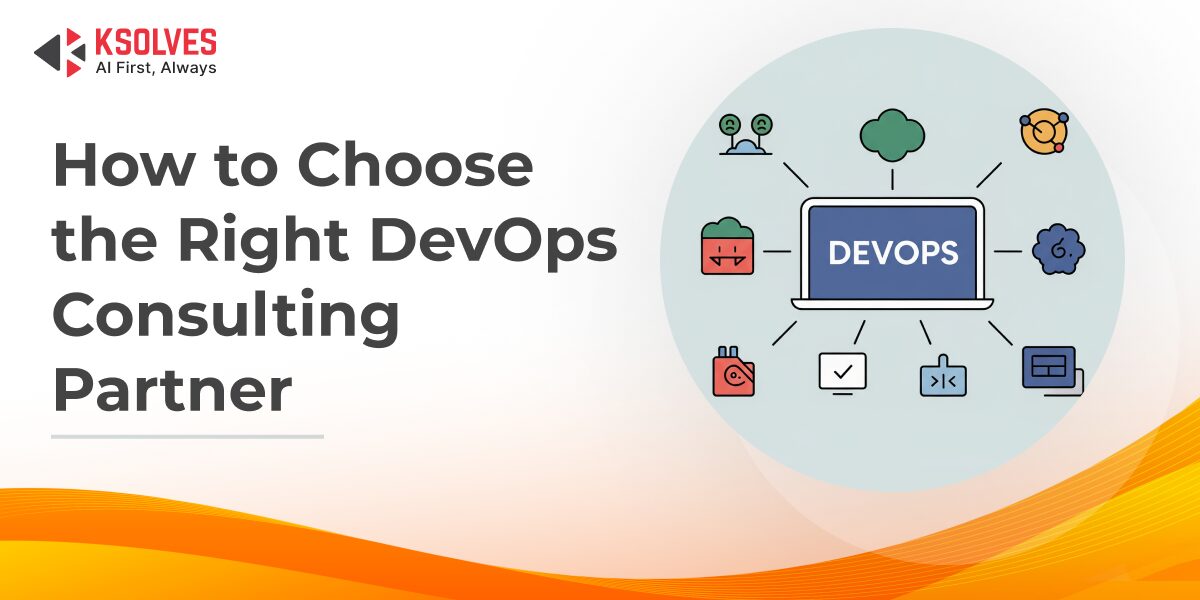
DevOps brings development and operations teams together to build, test, and deliver software faster while improving quality and reducing bottlenecks. It is more than a set of tools; it is a cultural shift that helps businesses respond quickly to changing demands.
Choosing the right consulting partner is essential for making this shift successful. The right partner will align with your goals, adapt to your team’s strengths, and guide you through both technical and cultural changes, so you can achieve measurable results and long-term value.
In this article, we will cover what to look for in a DevOps consulting partner, the key qualities that ensure success, common pitfalls to avoid, and how to evaluate whether a partner is the right fit for your organization.
Understand Your DevOps Needs
Before searching for a consulting partner, it is important to have a clear understanding of where your organization currently stands in its DevOps journey. Start by assessing your maturity level, whether you are operating with ad-hoc processes, have partial automation in place, or are already running fully integrated pipelines.
Next, outline your primary goals. These might include speeding up release cycles, enhancing your CI/CD processes, moving workloads to the cloud, implementing security automation, or improving system reliability.
Finally, define the scope of work you expect from a consulting partner. Some organizations need a complete DevOps transformation, while others may require help with specific services such as Kubernetes setup, infrastructure monitoring, or automated testing. The clearer you are about your needs, the easier it will be to find a partner who can deliver the right solutions.
Also Read: DevOps – A Complete Guide
Steps to Choosing the Right DevOps Consulting Partner
Choosing the right DevOps consulting partner means finding a team that aligns with your goals, understands your tech environment, and supports long-term success. The steps below will guide you in evaluating expertise, processes, and fit for a productive partnership.
1. Evaluate Technical Expertise
When selecting a DevOps consulting partner, make sure they excel in CI/CD pipeline design with tools like Jenkins, GitLab, or Azure DevOps, and have solid Infrastructure as Code skills using Terraform, Ansible, or CloudFormation. Proficiency in containerization and orchestration with Docker and Kubernetes, along with experience in AWS, Azure, or Google Cloud, is crucial.
Look for expertise in security and compliance automation through DevSecOps, backed by certifications such as AWS DevOps Competency or Kubernetes Certified Service Provider. The right partner should also be flexible with your existing toolchain while recommending improvements to optimize performance.
2. Check Industry and Domain Experience
When selecting a DevOps consulting partner, it is important to choose one with proven experience in your industry, whether that is finance, healthcare, or e-commerce, along with a solid understanding of compliance standards, such as HIPAA, GDPR, or ISO 27001.
For example, Ksolves delivered an Azure DevOps CI/CD pipeline for an IT services provider, automating testing and deployments, enhancing security through image scanning, and completely removing downtime. This level of domain knowledge and compliance awareness ensures the solutions are both high-performing and regulation-ready.
3. Culture and Process Alignment
Cultural and process alignment is often the deciding factor in a successful DevOps partnership. The right partner will share your values around agility, transparency, and continuous improvement, ensuring that collaboration feels natural rather than forced.
They should be able to work seamlessly with your in-house teams, offering training and knowledge transfer so that expertise stays within your organization. Clear communication, regular reporting, and well-defined escalation processes help maintain trust and keep projects on track.
Also Read: Top 10 DevOps Companies in India
4. Proof of Past Success
Look for authentic client testimonials and credible references that speak to the partner’s reliability, technical expertise, and ability to meet deadlines. Case studies and before-and-after comparisons can highlight tangible improvements such as faster deployment frequency, reduced lead times, and shorter mean time to recovery (MTTR), showing that results are not just theoretical but measurable.
A strong portfolio should showcase a variety of projects across different industries, technologies, and complexity levels. This diversity demonstrates adaptability and the ability to apply DevOps best practices in different contexts.
5. Flexibility and Scalability
The right partner should be able to start with a small, well-defined engagement, such as optimizing a single CI/CD pipeline, and then scale services as your infrastructure, team size, or project scope grows. This approach allows you to minimize initial risk while ensuring long-term support as your DevOps maturity increases.
Equally important is their ability to offer flexible pricing models, whether project-based, retainer-based, or time and material, so you can match engagement terms with your budget and business priorities.
6. Security and Compliance Practices
A strong DevOps consulting partner should embed security and compliance into every stage of the development lifecycle rather than treating it as an afterthought. This includes implementing robust policies for data encryption both at rest and in transit to protect sensitive information from unauthorized access. They should also be well-versed in industry-specific regulations, like HIPAA for healthcare, IRDAI for insurance, SOC 2 for SaaS, or GDPR for global data protection.
In addition, the partner should provide built-in audit trails and detailed logging for every environment, giving you full visibility into changes, deployments, and access events. This not only supports regulatory audits but also strengthens overall operational transparency.
7. Post-Implementation Support & Training
Post-implementation DevOps support is essential for sustaining the benefits of your DevOps transformation. A reliable consulting partner will provide ongoing monitoring, optimization, and proactive issue resolution to keep workflows running smoothly. Clear SLAs make sure you receive timely assistance when needed.
Just as important is equipping your internal team with the skills to manage and improve systems independently. Through documentation, training, and guided handovers, the right partner ensures your team can handle day-to-day operations and future enhancements with confidence.
Also Read: Top Challenges in DevOps and How to Solve Them
Common Pitfalls to Avoid When Selecting a DevOps Partner
Choosing the wrong DevOps partner can slow down transformation, increase costs, and create long-term inefficiencies. Being aware of common pitfalls helps you make a more informed and confident decision.
- Overpromising Without a Roadmap: Some vendors make big claims but lack a clear, step-by-step plan for delivery. This often leads to missed deadlines and unmet expectations.
- Lack of Industry-Specific Experience: A partner unfamiliar with your sector may struggle with its unique workflows, challenges, and compliance requirements, slowing down progress.
- Rigid Tool or Process Enforcement: Forcing a specific tech stack or methodology without understanding your existing systems can cause integration issues and unnecessary disruption.
- Poor Documentation and Transparency: Inadequate reporting, unclear handovers, and hidden decision-making can make it difficult to track progress or take over after the project ends.
Why Choose Ksolves as Your DevOps Consulting Partner
Ksolves has helped organizations across industries transform their software delivery pipelines, adopt modern infrastructure practices, and achieve measurable results in speed, reliability, and scalability. Our approach blends deep technical expertise with a strong focus on cultural alignment, ensuring your DevOps journey is both smooth and sustainable.
We implement tools, build processes, transfer knowledge, and enable your teams to operate independently long after our engagement ends.
What Sets Us Apart
- Proven Industry Expertise – Successful DevOps implementations in finance, healthcare, SaaS, and IT services.
- Certified Professionals – AWS DevOps Competency, Kubernetes Certified Service Provider, and more.
- End-to-End Capabilities – CI/CD automation, cloud migration, container orchestration, and security integration.
- Custom Roadmaps – Tailored strategies aligned with your goals and existing environment.
- Post-Implementation Support – Ongoing optimization, training, and SLAs for smooth operations.
Conclusion
Selecting the right DevOps consulting partner is more than just a procurement decision. It is a strategic move that can determine the speed, quality, and sustainability of your software delivery. By carefully assessing technical expertise, industry experience, cultural alignment, and post-implementation DevOps support, you set the foundation for a partnership that drives measurable business outcomes.
A trusted provider of DevOps consulting services will not only help you implement modern tools and processes but will also guide you through the cultural and operational changes needed for long-term success. Whether you are aiming for faster release cycles, stronger security, or seamless cloud adoption, the right partner will work alongside your teams to ensure your DevOps transformation delivers lasting value.
Partner with Ksolves to leverage our proven expertise, certified professionals, and tailored strategies. Let us help you accelerate your DevOps journey, achieve operational excellence, and turn technology into a competitive advantage.


 Vivek Singh