



Odoo for Food & Beverage Distribution: Streamlining Inventory, Logistics & Compliance
Odoo
5 MIN READ
April 9, 2026

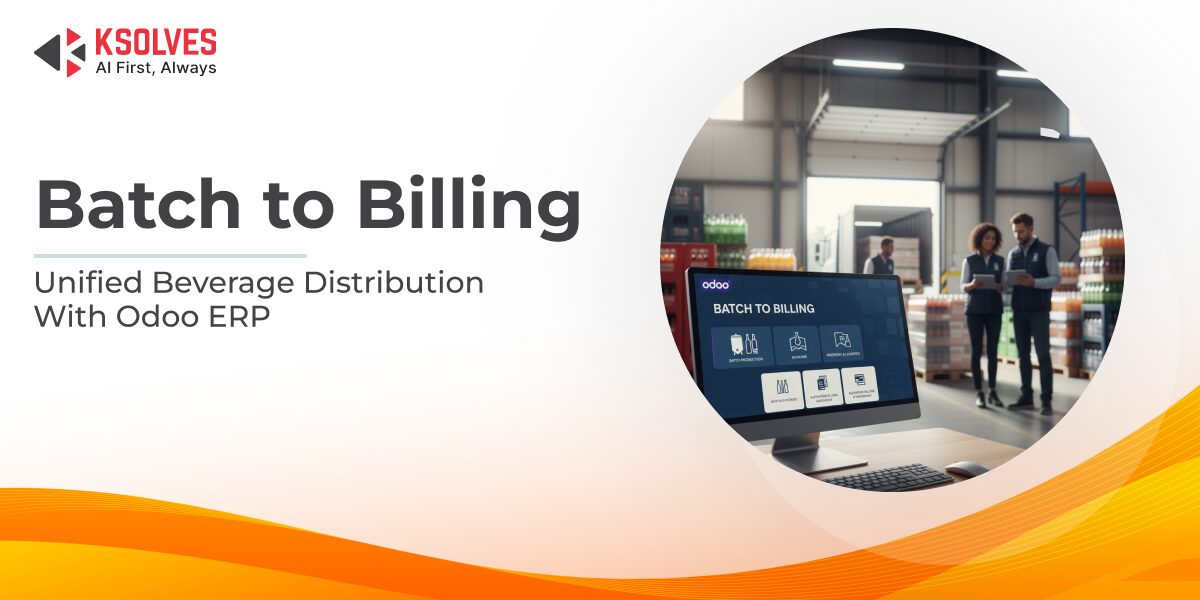
In food and beverage distribution, time is inventory.
Products have limited shelf lives. Margins are tight. Demand fluctuates with seasons and promotions. At the same time, customers expect accurate deliveries, competitive pricing, and full traceability. Even a small operational gap, be it a missed expiry alert or delayed dispatch, can quickly impact profitability.
Yet many distributors still rely on disconnected systems that limit real-time visibility across warehouses, procurement, sales, and finance. This often leads to stock imbalances, avoidable expiry losses, and inefficient delivery planning.
To stay competitive, businesses need a centralized ERP that connects every operational layer. An integrated platform like Odoo ERP helps unify inventory, logistics, accounting, and sales into one streamlined system.
In this blog, we’ll explore how Odoo for food & beverage simplifies distribution operations and supports scalable, compliant, and efficient growth.
Key Challenges in Food & Beverage Distribution
Food and beverage distribution operates in a high-risk, high-precision environment. Small inefficiencies can quickly escalate into financial losses, compliance issues, or strained customer relationships.
Below are the most critical operational challenges distributors must navigate:
1. Perishability & Expiry Management
Perishable inventory demands disciplined stock rotation policies such as FIFO (First-In-First-Out) and FEFO (First-Expiry-First-Out). Without automated system controls, distributors risk dispatching near-expiry products, increasing returns, write-offs, and compliance exposure.
Odoo’s automated removal strategies ensure that FEFO is enforced at the warehouse level, removing human error from the picking process.
Automated Removal Strategies
In Odoo, you don’t just track dates; the system actively prevents a picker from selecting a newer batch if an older one (FEFO) is available.
To operate safely and efficiently, businesses require:
- Batch and lot-level traceability
- Automated expiry alerts
- Shelf-life tracking across warehouses
- Rapid recall management capabilities
Manual tracking simply cannot sustain this level of control at scale.
Also Read: Conquer Food Distribution Complexity with ERP
2. Demand Volatility & Forecasting Gaps
Demand in the food and beverage sector is rarely stable. It shifts due to:
- Seasonal buying patterns
- Festival or holiday spikes
- Trade promotions and discounts
- Regional consumption differences
By leveraging Odoo’s replenishment triggers and lead-time logic, distributors can maintain optimal stock levels based on real-time sales data rather than guesswork.
Without accurate forecasting and demand planning, distributors either overstock (locking up capital and increasing expiry risk) or understock (leading to missed sales and dissatisfied customers). Both scenarios directly impact profitability and cash flow.
3. Multi-Warehouse & Multi-Channel Distribution
Modern distributors often operate through complex networks that include:
- Central warehouses
- Regional distribution centers
- Direct Store Delivery (DSD) routes
- B2B retail chains
- HORECA (Hotels, Restaurants, Cafés) channels
Coordinating inventory allocation, replenishment, and fulfillment across multiple locations requires real-time synchronization. Odoo synchronizes B2B, HORECA, and DSD channels in one database, using automated ‘Push & Pull‘ rules to move stock between regional hubs and central warehouses seamlessly.
Any visibility gap can create stock imbalances and delayed order processing.
4. Route Planning & Delivery Efficiency
Logistics is a major cost driver in distribution. Fuel prices, vehicle maintenance, driver scheduling, and delivery timelines directly affect margins. Integrated with the Odoo Barcode app, the system optimizes delivery sequences and allows drivers to record Proof of Delivery (PoD) instantly, bridging the gap between logistics and accounting.
When route planning is handled manually or through disconnected systems, businesses often experience:
- Delayed deliveries
- Increased fuel consumption
- Inefficient fleet utilization
- Poor delivery performance tracking
Optimizing dispatch and delivery processes becomes critical to maintaining service quality while controlling costs.
5. Compliance & Quality Control Points (QCP)
Food distribution is heavily regulated. Businesses must comply with food safety and quality standards such as FSSAI, FDA, and regional regulatory bodies.
Compliance requires:
- End-to-end lot traceability
- Structured quality inspections
- Audit-ready documentation
- Accurate labeling and product tracking
Non-compliance can lead to penalties, product recalls, and long-term reputational damage. making system-driven governance essential.
How Odoo Supports Food & Beverage Distribution
Managing food and beverage distribution requires tight coordination between inventory, procurement, sales, finance, and logistics. Odoo delivers this coordination through a fully integrated ERP ecosystem where all core functions operate on a single database.
This unified architecture eliminates data silos, reduces duplication, and provides real-time visibility across the entire supply chain, from purchase planning to final delivery.
1. Unified System Architecture
Unlike fragmented systems where departments operate in isolation, Odoo centralizes business processes within one platform. When a sales order is confirmed:
- Inventory levels update automatically.
- Reordering rules trigger procurement when thresholds are reached.
- Delivery orders are generated for warehouse processing.
- Invoices are created seamlessly.
- Accounting entries post in real time.
Because every module is interconnected, information flows automatically across departments. This significantly reduces manual intervention, processing delays, and reconciliation errors.
2. Real-Time Inventory Management
Odoo’s Inventory module provides structured control over stock movements and warehouse operations.
Key capabilities include:
- Multi-warehouse and multi-location management.
- Automated reordering rules (min/max levels).
- Safety stock configuration.
- Barcode-enabled receiving, picking, and dispatch.
- Real-time stock valuation and reporting.
This ensures distributors always know what stock is available, where it is located, and how it is moving. Improved visibility reduces stockouts, prevents overstocking, and enhances working capital control.
3. Batch & Lot Traceability
Traceability is critical in food and beverage distribution. Odoo enables tracking products by lot or serial numbers throughout their lifecycle.
Distributors can manage:
- Incoming batch registration during receipt.
- Internal warehouse transfers with lot tracking.
- Outgoing deliveries linked to specific lots.
- Customer traceability reports for recall scenarios.
FEFO (First-Expiry-First-Out) removal strategies can be configured to prioritize the dispatch of products with the nearest expiry dates. In case of a product recall, affected batches and customers can be identified quickly, minimizing risk and response time.
4. Demand Forecasting & Smart Procurement
Odoo supports data-driven purchasing decisions by combining historical sales data with automated replenishment logic.
Core procurement features include:
- Minimum and maximum stock rules.
- Vendor lead time configuration.
- Automated purchase order generation.
- Supplier performance tracking.
- Purchase analysis reporting.
By aligning procurement with actual demand patterns, distributors can reduce excess inventory, improve turnover ratios, and protect cash flow.
5. Route & Fleet Management
Logistics efficiency plays a major role in profitability. Odoo’s Fleet and delivery management capabilities help structure and monitor distribution operations.
Distributors can:
- Plan and schedule deliveries.
- Track vehicle assignments and usage.
- Monitor maintenance schedules and costs.
- Analyze fleet-related expenses.
While Odoo is not a standalone GPS-based route optimization engine, it supports organized delivery scheduling, vehicle cost monitoring, and dispatch coordination. When integrated with third-party logistics tools, it can further enhance route efficiency.
Core Odoo Modules That Power Food & Beverage Distribution
One of the biggest strengths of Odoo is its modular yet fully integrated architecture. Each module serves a specific operational purpose, but they all run on a shared database. It ensures data flows seamlessly across departments without duplication or manual reconciliation.
Here’s how the core Odoo modules work together to support food & beverage distribution:
-
Inventory – The Operational Backbone
The Inventory module manages stock movements, warehouse locations, batch tracking, expiry control, and valuation.
When goods are received, transferred, or dispatched, inventory updates in real time, ensuring accurate stock visibility across all warehouses and depots.
Also Read: Odoo Inventory Management Apps: Maximize Warehouse Efficiency
-
Purchase – Intelligent Procurement Control
The Purchase module connects directly with inventory levels and reordering rules.
When stock reaches defined minimum thresholds, Odoo can automatically generate purchase orders based on vendor lead times and pricing agreements.
Once goods are received, inventory updates instantly, and vendor bills flow into accounting without re-entry.
Also Read: Maximizing Efficiency with Dashboards and Reports: Purchase Management in Odoo 16
-
Sales – Structured Order Management
The Sales module handles quotations, pricing rules, customer hierarchies, volume discounts, and credit limits.
When a sales order is confirmed:
- A delivery order is generated.
- Stock is reserved automatically.
- Invoicing is triggered.
- Financial entries are recorded.
This eliminates gaps between order processing, dispatch, and billing.
-
Accounting – Real-Time Financial Visibility
Accounting is tightly integrated with sales and purchase workflows.
- Customer invoices are generated directly from sales orders.
- Vendor bills are linked to purchase receipts.
- Tax calculations apply automatically.
- Payments reconcile against open invoices.
This ensures accurate financial reporting, margin analysis, and working capital tracking without manual adjustments.
Also Read: Comprehensive Guide to Odoo Accounting Features – Streamlining Finances
-
Barcode – Warehouse Efficiency & Accuracy
The Barcode module enhances warehouse speed and accuracy through scanner-enabled operations.
Teams can:
- Scan incoming batches.
- Validate picking orders.
- Confirm dispatch.
- Reduce manual entry errors.
This is especially critical for high-volume food and beverage operations where speed and precision matter.
-
Quality – Compliance & Inspection Control
The Quality module allows businesses to configure inspection checkpoints during receiving, production (if applicable), or dispatch.
Distributors can:
- Record quality checks.
- Define pass/fail criteria.
- Maintain audit-ready documentation.
This strengthens compliance with food safety regulations and internal quality standards.
-
Manufacturing (For Private Labeling or Repacking)
For distributors engaged in private labeling, repacking, or light processing, the Manufacturing module enables:
- Bill of Materials (BoM) management.
- Production orders.
- Batch tracking in finished goods.
- Raw material consumption tracking.
This ensures traceability from raw materials to finished products.
Also Read: How Odoo ERP Streamlines Manufacturing: From Raw Materials to Delivery
-
Fleet – Logistics & Vehicle Management
The Fleet module tracks:
- Vehicle assignments.
- Maintenance schedules.
- Fuel costs.
- Driver allocations.
Although not a GPS routing system, it provides structured visibility into fleet utilization and operational expenses.
-
CRM – Customer & Distributor Relationship Management
CRM centralizes customer data, sales pipelines, and communication history.
For food & beverage distributors, this supports:
- Territory-based sales tracking.
- Distributor performance analysis.
- Follow-ups on payment cycles.
- Stronger retailer relationships.
Also Read: Effortless Customer Management with Odoo CRM: The Ultimate Solution
How Ksolves Helps Food & Beverage Distributors Maximize Odoo ROI
Implementing Odoo correctly determines whether it becomes a growth driver or just another system. Ksolves, a trusted Odoo implementation partner, focuses on practical, business-driven implementation.
- Custom configuration aligned to food & beverage workflows (FEFO, batch tracking, pricing rules, multi-warehouse setup).
- Strong supply chain understanding to structure inventory, procurement, and delivery processes correctly.
- Seamless integrations with POS, payment providers, barcode systems, weighing scales, and logistics tools.
- Clear reporting dashboards for inventory aging, margins, and operational performance.
- Post-go-live support for optimization and scaling.
The goal is simple – implement Odoo in a way that improves visibility, reduces operational gaps, and supports long-term growth.
Final Words
In food & beverage distribution, the difference between operational efficiency and constant firefighting lies in execution. While Odoo provides a strong ERP foundation, the real value depends on how precisely it is aligned with your workflows.
Ksolves, a trusted Odoo Gold Partner, brings deep Odoo expertise and practical supply chain understanding to ensure the system supports real distribution complexities, from expiry control and batch traceability to pricing structures and multi-warehouse operations.
With structured implementation, seamless integrations, and ongoing optimization, Ksolves helps distributors turn Odoo into a scalable, performance-driven growth engine, not just another software system.
































AUTHOR
Odoo
Share with